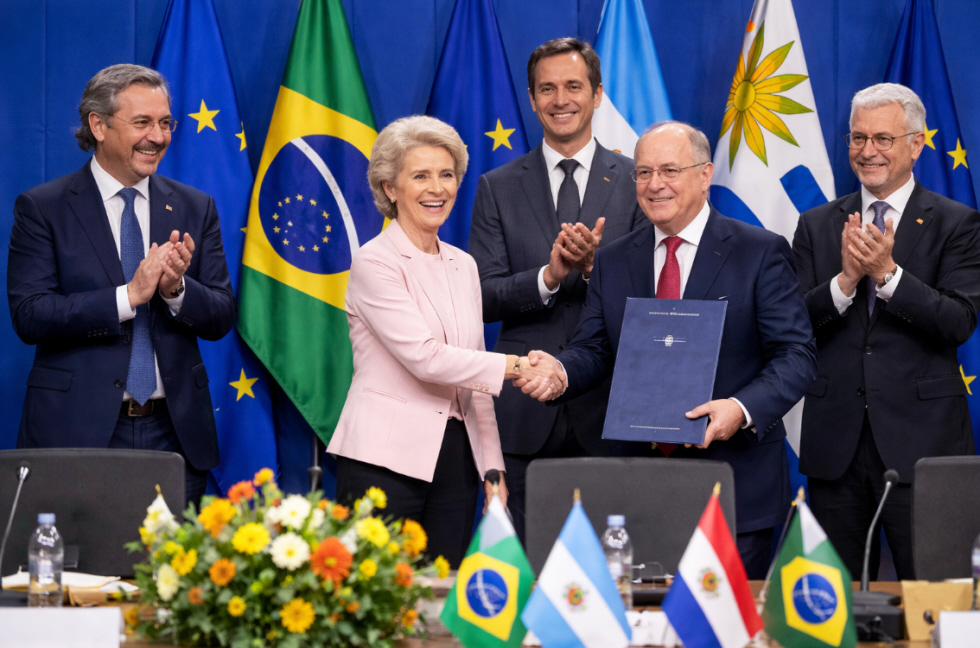
The free trade agreement between the European Union and the Mercosur bloc — composed of Brazil, Argentina, Uruguay, and Paraguay — is set to move forward despite an ongoing legal review by the Court of Justice of the European Union. The announcement signals a significant step in strengthening economic ties between Europe and South America.
European Commission President Ursula von der Leyen confirmed in Brussels that the agreement will soon be provisionally applied. Her statement reflects the political momentum behind the deal, which has been under negotiation and scrutiny for years due to its economic and environmental implications. A major development came when Uruguay and Argentina formally ratified the agreement, helping clear procedural obstacles and paving the way for provisional implementation. Their approval demonstrates growing regional commitment to deeper integration with the European market.
The provisional application will allow businesses in the European Union, Uruguay, and Argentina to begin benefiting from improved trade conditions before the treaty is fully enacted. This includes more favorable customs regulations, reduced tariffs, and streamlined export procedures. Such early implementation is particularly important because the formal entry into force of the agreement could take considerable time.
Approval processes within the European Parliament and additional legal evaluations may extend the timeline for complete ratification. Earlier this year, the Court of Justice of the European Union narrowly ruled that the agreement should undergo judicial review before a final vote is held. This decision added a layer of legal complexity, though it did not halt political support for advancing the deal.
Supporters argue that the agreement will boost trade flows, enhance supply chains, and open new opportunities for industries on both sides of the Atlantic. They view the partnership as a strategic response to shifting global trade dynamics and rising economic competition. While debates continue over regulatory standards and long-term impacts, the provisional rollout represents a decisive moment. It reflects a broader commitment by both regions to expand cooperation and deepen economic integration despite institutional and legal hurdles.