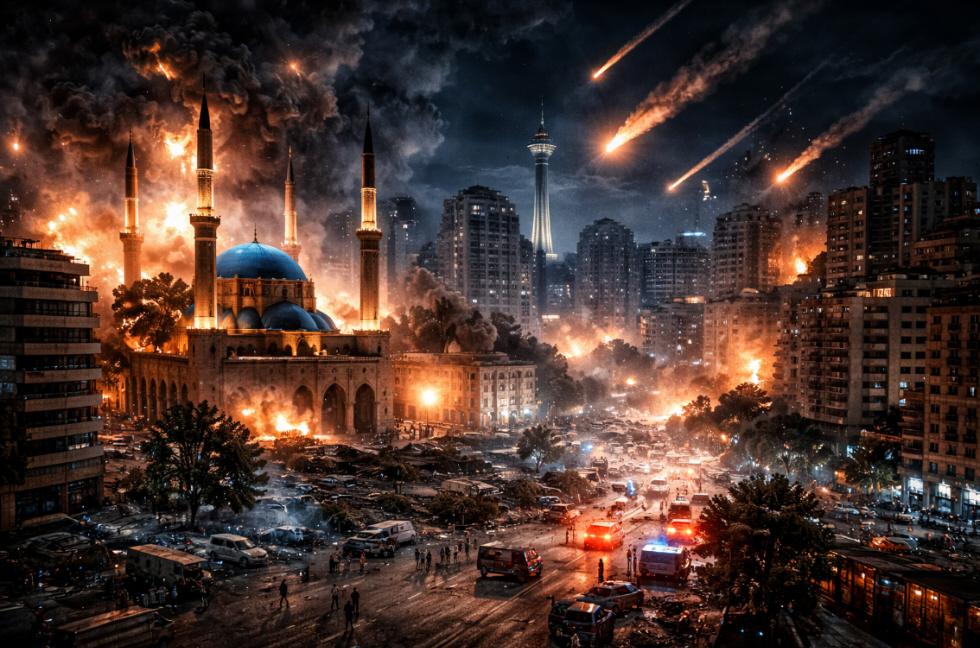
A dangerous new escalation is unfolding in the Middle East after the Lebanese government declared the military activities of Hezbollah illegal, a dramatic political step that could reshape the balance of power inside the country. The decision comes amid rising regional tensions linked to the broader conflict involving Iran and Israel. The announcement was made by Prime Minister Nawaf Salam in a televised address that immediately drew attention across the region.
The Lebanese leader emphasized that no armed organization should operate outside the authority of the state. For years Hezbollah has maintained a complex position within Lebanon’s political system. While the group holds seats in parliament and participates in political alliances, it has also preserved a powerful independent military structure that operates alongside the Lebanese armed forces. This dual role has long been a source of controversy both inside Lebanon and internationally.
Critics argue that the presence of an autonomous armed force undermines the authority of the national government and risks drawing the country into regional conflicts. The latest decision by the Lebanese government comes at a time when tensions across the Middle East have intensified dramatically. Hezbollah has launched rockets and drones toward Israeli territory, raising fears that the conflict could spill fully into Lebanon.
In response, the Israeli military has carried out a series of airstrikes against positions linked to the Iranian-backed militia across Lebanese territory. Several operations reportedly targeted areas near Beirut as well as strategic locations in southern Lebanon. Israeli officials say the strikes were aimed at dismantling Hezbollah’s military infrastructure and command networks, which they accuse of being used to coordinate attacks against Israel. Amid the escalation, the Israeli army announced that a targeted strike had killed Hussein Moukalled, identified as Hezbollah’s intelligence chief.
According to the military statement, the operation was carried out inside the Lebanese capital. If confirmed, the elimination of such a senior intelligence figure would represent a major blow to the operational structure of the organization, as intelligence leadership plays a central role in planning and coordinating military actions. Meanwhile, the impact of the confrontation is already being felt among civilians.
Reports from Lebanon indicate dozens of casualties and widespread fear in communities that now face the constant risk of further airstrikes. The Lebanese government now faces enormous pressure as it attempts to preserve stability in a country already struggling with a deep economic and political crisis that has weakened state institutions.
As tensions continue to rise, analysts warn that Lebanon could once again become one of the main theaters of the regional confrontation between Israel and groups aligned with Iran, raising the risk of a much broader conflict across the Middle East.