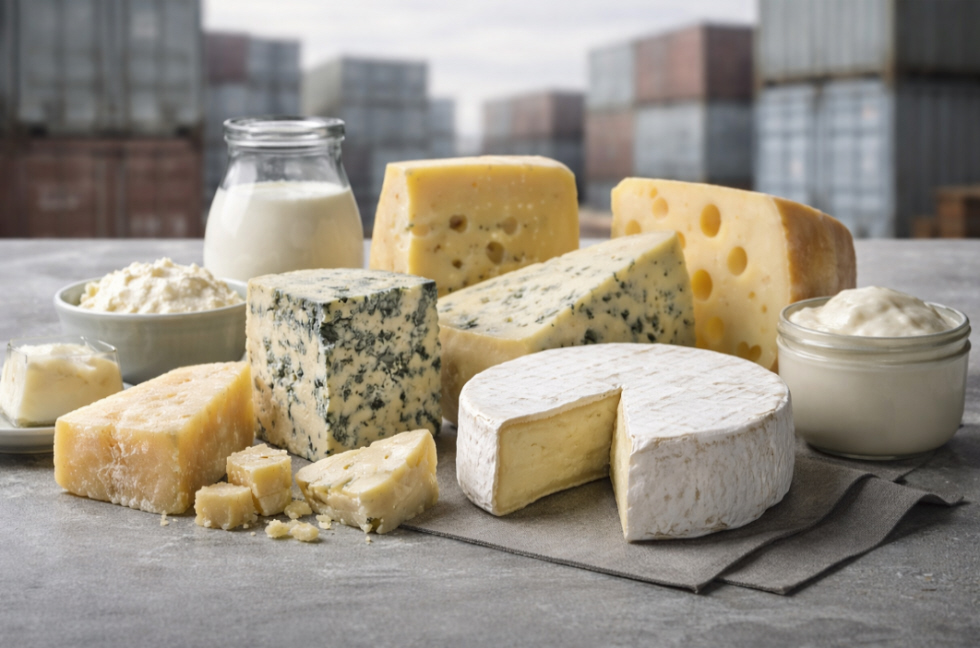
China has intensified its trade dispute with the European Union by extending tariff measures for the first time to the European dairy industry. As of this week, Beijing is applying provisional tariffs of up to 42.7% on selected dairy products from the EU, a move that is raising serious concerns among exporters and industry groups across Europe. The products most affected are cheeses, particularly well-known varieties such as Camembert and Roquefort.
For these items, European exporters are now required to post security deposits ranging from 21.9% to 42.7%, depending on the company and its level of participation in the Chinese investigation. By contrast, key products such as whey and milk powder, which account for a large share of EU dairy exports to China, remain unaffected at this stage. The measure stems from an anti-subsidy investigation launched by China in August 2024.
According to the Chinese Ministry of Commerce, preliminary findings suggest that EU government subsidies have caused “significant harm” to China’s domestic dairy industry. Beijing describes its actions as “prudent” and says it remains open to dialogue with Brussels. The European Union has firmly rejected these accusations. The European Commission argues that the investigation is based on questionable claims and insufficient evidence, and has pledged to defend European farmers and exporters against what it views as unjustified trade restrictions.
Nevertheless, the decision adds further strain to an already tense trade relationship. Tariffs are particularly high for companies that did not take part in the investigation, including Belgian and Dutch subsidiaries of major dairy groups. Dozens of firms from Germany, France, Italy, and the Netherlands are also affected, with duties generally ranging between 28% and 30%. In 2024, China imported EU dairy products worth approximately $589 million, highlighting the importance of the Chinese market for European producers.
Industry associations across Europe have reacted with alarm. In Germany, the dairy sector described the move as a “severe blow” for exporters, while French industry representatives called it a “shock”, especially for large producers. Sector leaders warn of price increases, reduced competitiveness, and growing pressure on an already fragile market environment.
The tariffs are part of a broader and long-standing trade conflict between China and the EU. Tensions escalated after the EU launched an investigation into state-subsidized Chinese electric vehicles, prompting Beijing to respond with countermeasures targeting European products such as dairy goods, pork, and brandy. Although the current duties are provisional and may still be adjusted, past cases suggest that China can both tighten and ease tariffs depending on how negotiations evolve.
Domestic factors also play a role. China has become the world’s third-largest milk producer, significantly expanding its domestic dairy sector. At the same time, declining demand—partly linked to a falling birth rate—and rising supply are putting pressure on the local market. Consumer trust in domestic dairy products has also remained fragile since past food safety scandals.
As a result, the new tariffs are expected to lead to notable price increases for certain European cheeses in China and may reshape dairy trade flows between the two sides, at least in the short term. Much will now depend on whether Beijing and Brussels can de-escalate the dispute through dialogue or whether this new front becomes part of a deeper and more prolonged trade confrontation.