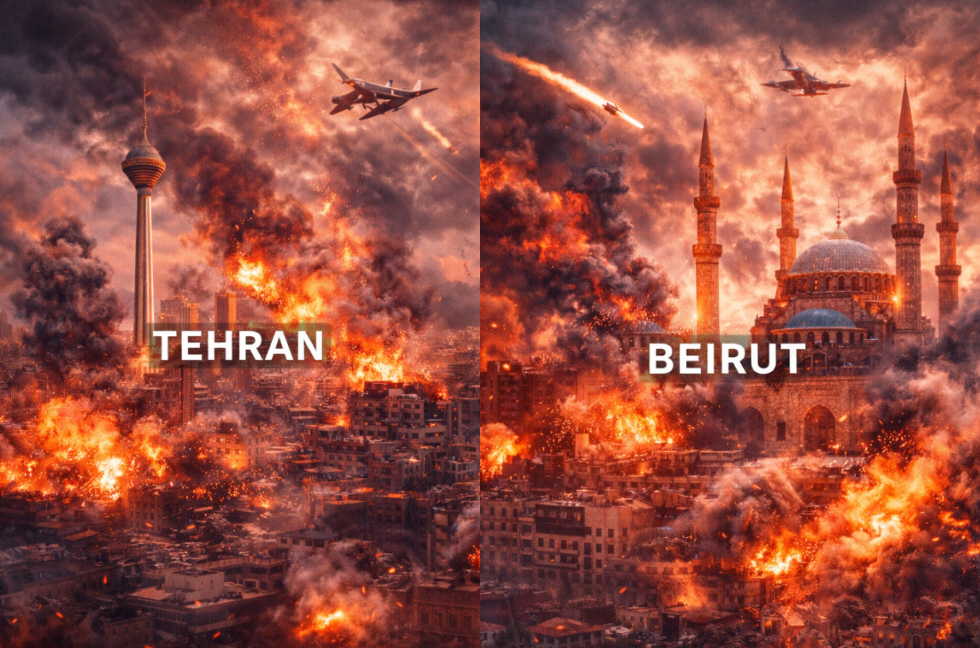
The conflict in the Middle East entered its seventh day with a new wave of airstrikes hitting strategic locations across the region. Early in the morning, explosions were reported in Iran’s capital, Tehran, while separate strikes were also heard in areas near Beirut. The escalation signals a more aggressive phase of the confrontation involving Israel, the United States and Iran, with several Gulf states increasingly drawn into the broader regional tension.
Overnight attacks were described as among the most intense since the beginning of the hostilities. In Tehran, air defense systems were activated after multiple aerial threats were detected approaching the city. Iranian authorities reported that several incoming projectiles were intercepted, though impacts were reported in strategic facilities located outside the capital.
Meanwhile, the situation in Beirut once again raised international concern. Loud explosions echoed across parts of the Lebanese capital, fueling fears that the regional conflict could expand further into the eastern Mediterranean. The seventh day of fighting confirms that the conflict has moved beyond a limited confrontation and is increasingly taking the shape of a broader regional crisis. Military operations are now unfolding across several fronts simultaneously.
Military analysts suggest the intensity of the strikes reflects an attempt to weaken key infrastructure and disrupt defensive capabilities. Each new day of combat introduces additional uncertainty into an already volatile strategic environment. At the same time, tensions are being reflected in global energy markets. International oil prices surged to new highs amid fears that the war could threaten critical supply routes across the Middle East.
European governments are watching developments with growing concern. Officials warn that a prolonged conflict could directly affect the continent’s energy security and economic stability. Diplomatic channels remain active as world leaders attempt to prevent the conflict from escalating into an even wider confrontation.
Several governments are increasing contacts in an effort to reduce tensions. For now, the seventh day of war underscores how fragile the regional balance has become, as the world closely monitors each new military development and its potential global consequences.