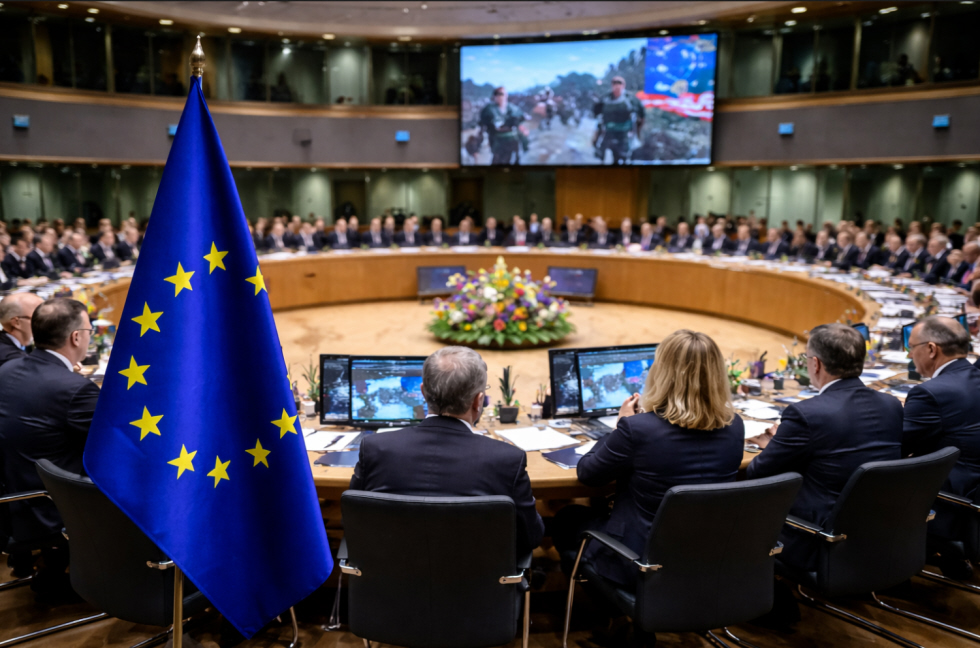
Sympathy for Venezuelan President Nicolás Maduro has always been low across Europe. Nevertheless, the U.S. military intervention and Maduro’s capture on Saturday sent shockwaves through the European Union. Beyond the figure of Maduro himself, what deeply concerns European governments is the precedent set by a unilateral action of this magnitude, carried out without international authorization and outside established multilateral frameworks. According to EU diplomatic sources, there are growing fears that this approach could spill over into other highly sensitive global hotspots.
In Brussels, officials have privately expressed concern about potential repercussions for conflict regions such as Ukraine or even Greenland, the Danish autonomous territory whose strategic importance has been steadily increasing. The prevailing view is that the rules-based international order is under direct strain. From Berlin’s perspective, the German government sees President Donald Trump deliberately returning to a traditional great-power policy. Under this logic, U.S. interests are to be enforced by force if necessary, while multilateral coordination formats are pushed aside. European officials argue that this mindset helps explain Washington’s violations of World Trade Organization trade rules, sanctions against judges of the International Criminal Court, and now the military attack on Venezuela, officially framed as part of the fight against drug trafficking.
Skepticism deepens when recalling that, in early December, Trump pardoned the former president of Honduras, who had been convicted of importing drugs into the United States. This contradiction has reinforced European doubts about the stated justification for the Venezuela operation and strengthened the belief that the action is more about projecting power than pursuing a consistent anti-narcotics strategy. Trump’s campaign promise to keep the United States out of international conflicts appears increasingly hollow to many observers in Europe.
The Pentagon was renamed the Ministry of War, U.S. forces carried out military strikes in Iran and Yemen, and for weeks the American military has been bombing vessels suspected of drug trafficking, even in international waters of the Caribbean. For analysts, this escalation raises an uncomfortable question: does Russian President Vladimir Putin now feel vindicated? Several European politicians have warned that if Washington claims the right to arrest a foreign head of state and remove him from power, Moscow could adopt similar reasoning to justify regime change in Ukraine.
British Labour MP John McDonnell was among those voicing this concern publicly on Saturday. Distrust toward Washington’s contradictory negotiations with the Kremlin continues to grow, particularly after Trump—like Putin—has questioned the legitimacy of Ukrainian President Volodymyr Zelensky, citing the absence of elections since 2019 due to the war. Against this backdrop, Austria reiterated, together with its EU partners, its commitment to pursuing a peaceful and democratic solution for Venezuela based on the United Nations Charter, Foreign Minister Beate Meinl-Reisinger stated.
For Europe, Green Party leader Leonore Gewessler emphasized, the events represent a clear signal: cohesion, strength, and the defense of international law are an essential mission. That message was echoed on the streets of Vienna on Saturday afternoon, when several dozen demonstrators marched from Votivpark to the U.S. embassy to protest President Trump’s actions.