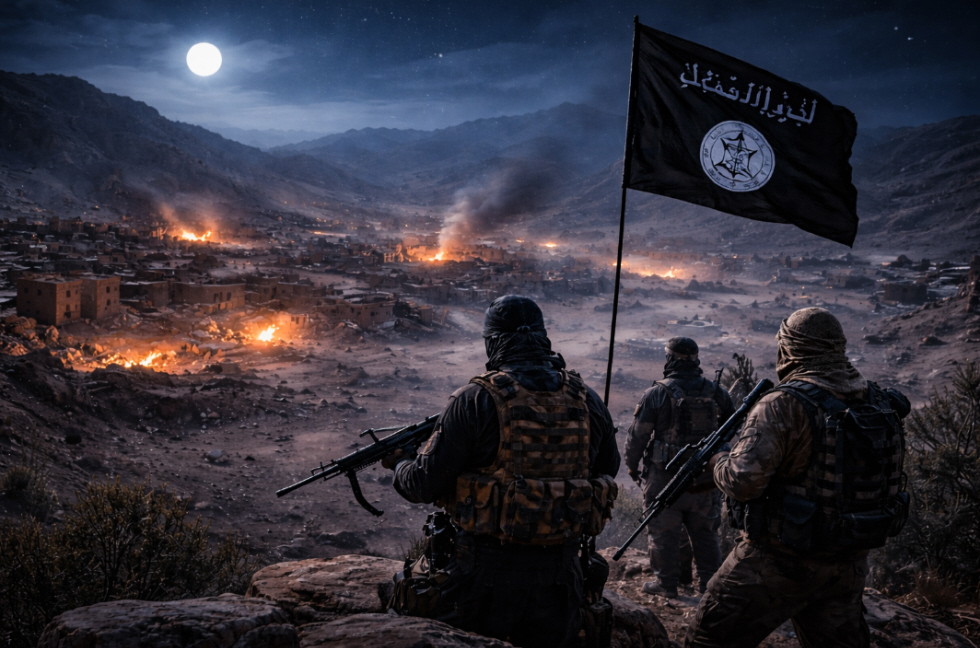
Little remains of the territorial “caliphate” once controlled by the militant group known as the Islamic State in Syria and Iraq. Although it lost its physical strongholds years ago, the organization has not disappeared entirely. In recent months, fragmented cells have shown signs of renewed activity, particularly in remote desert and rural areas of Syria.
Following the collapse of Bashar al-Assad’s regime, power vacuums in certain regions have created conditions that armed groups can exploit. Security analysts warn that the Islamic State has adapted to shifting realities, operating now through decentralized networks rather than centralized territorial control. In recent weeks, attacks have been reported against Syrian government forces as well as against positions where U.S. units operate in the region.
These incidents have renewed international concern about a potential resurgence of the group. Washington responded with what it described as targeted defensive operations. U.S. officials reiterated that their presence in the area remains focused on preventing the reemergence of terrorist threats and supporting regional stability. The emergence of an audio message attributed to Islamic State spokesperson Abu Husaifa al-Ansari has added a new layer of concern. In the recording, the speaker attempts to rally supporters and reinforce the group’s ideological narrative.
Counterterrorism experts note that such messages are often intended to project strength during periods of operational weakness. Rather than signaling territorial expansion, they may reflect efforts to maintain cohesion and inspire sympathizers through propaganda. The broader regional context remains complex. Syria is navigating an uncertain transitional phase, while Iraq continues to face internal security and political challenges.
In such an environment, even small insurgent cells can pose significant risks if left unchecked. International forces operating in the region have reportedly intensified surveillance and coordination with local authorities. The objective is to prevent dispersed networks from consolidating into more structured operational units. Although the Islamic State no longer controls cities or large territories as it once did, its ability to carry out isolated attacks demonstrates that the threat has not been fully eliminated.
The shift toward decentralized tactics presents a different kind of security challenge. The renewed activity in Syria serves as a reminder that the fight against violent extremism is long-term and multifaceted. Sustainable regional stability will depend not only on military deterrence but also on political solutions that address the underlying conditions enabling radicalization.