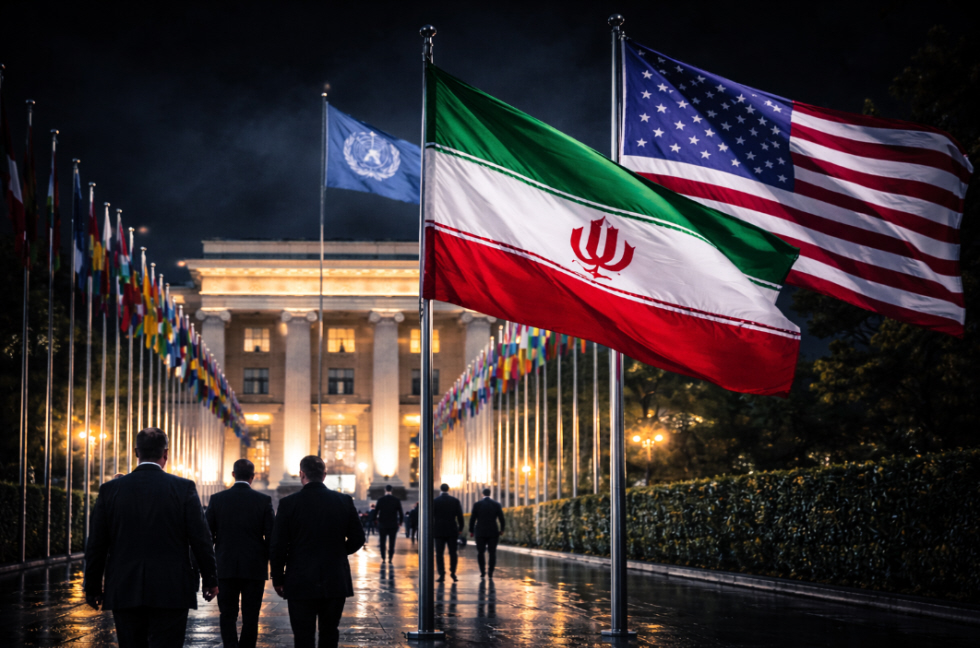
Iran’s Foreign Minister Abbas Araqchi warned that Tehran would respond with a counterattack if the United States launches any military action against the country. His remarks come amid renewed rhetorical escalation between Washington and Tehran over the Iranian nuclear program. Araqchi emphasized that Iran considers it a legitimate right to defend itself against any aggression.
The statement was made following recent comments by U.S. President Donald Trump, which signaled a tougher stance toward Iran. At the same time, the Iranian foreign minister stressed that there are “good chances” to resolve the dispute through diplomatic channels. He indicated that negotiations are ongoing and that progress is being made on drafting preliminary elements of a potential agreement. Oman, acting as mediator, confirmed that a new round of indirect talks will take place in Geneva on Thursday.
The meetings are aimed at reducing tensions and advancing discussions surrounding Iran’s nuclear activities. According to Araqchi, negotiators are working on both technical and political components of a possible framework. If this process continues constructively, he suggested that a rapid agreement could still be achievable. The dual message of warning and willingness to negotiate reflects Iran’s current strategic posture — projecting strength while keeping diplomatic pathways open.
Tehran appears determined to avoid isolation while maintaining leverage. Meanwhile, smaller protests were reported at several Iranian universities for a second consecutive day. Although limited in scale, the demonstrations underscore internal pressures linked to economic and geopolitical strain. In Washington, messaging has similarly alternated between pressure and dialogue. U.S. officials continue to emphasize accountability while leaving space for diplomatic progress
if negotiations move forward. The situation resembles previous phases of controlled confrontation, where public rhetoric intensifies even as backchannel diplomacy remains active.
Both sides appear cautious about crossing thresholds that could trigger broader conflict. The upcoming talks in Geneva will be crucial in determining whether tensions ease through negotiation or whether escalating threats push the region toward a more volatile phase.