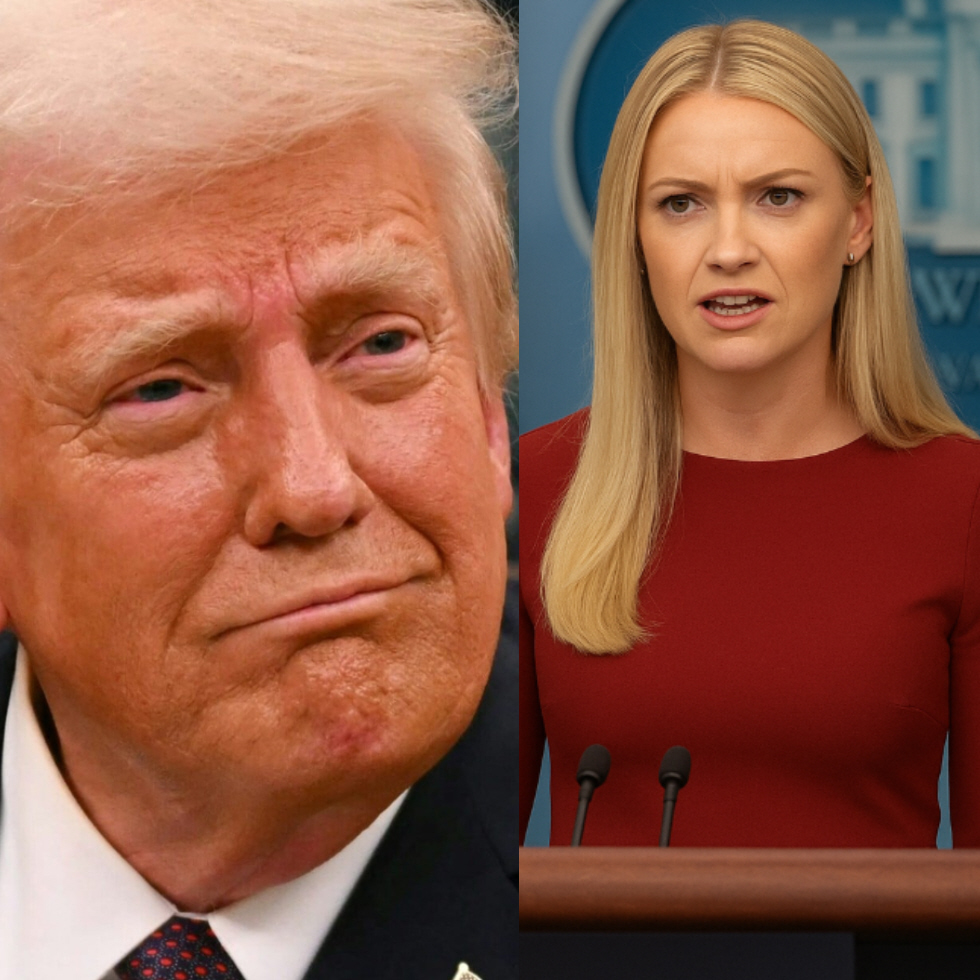
A single phrase was enough to turn a simple diplomatic exchange into an international scandal. Donald Trump’s new spokesperson, Karoline Leavitt, replied with an unexpected “Your mother did” when a journalist asked why Budapest had been chosen as the venue for the upcoming meeting between Trump and Vladimir Putin. The exchange came after HuffPost reporter Shirish V. Dáte recalled that in 1994, the Budapest Memorandum was signed in that city — an agreement in which Russia promised to respect Ukraine’s territorial integrity, a commitment Moscow violated with the annexation of Crimea in 2014 and its ongoing war.
Dáte had asked whether the former president was aware of the symbolism and who had proposed the location, but the spokeswoman’s sarcastic response ignited a media firestorm. Shortly afterward, Trump’s communications director Steven Cheung doubled down on the provocative tone, repeating the “Your mom” phrase on the social platform X and accusing the journalist of being a “left-wing agitator” spreading “Democratic propaganda.” Cheung even published screenshots of the exchange in an attempt to expose the reporter, but the result backfired — sparking a wave of criticism against the Republican campaign for its offensive and unprofessional behavior.
HuffPost later issued a statement condemning what it called “schoolyard insults,” insisting that they will continue to ask critical questions despite pressure and ridicule. The incident escalated when other officials within Trump’s circle adopted the same mocking tone. A Pentagon spokesperson responded similarly to another media inquiry about a tie featuring Russian colors worn by Defense Secretary Pete Hegseth, saying, “Your mom bought it.”
Analysts have interpreted the episode as a reflection of the growing verbal hostility and contempt toward the press that characterize the current American political climate, where social media platforms have become the main stage for confrontation. What began as a legitimate question about diplomatic symbolism ultimately revealed a deeper pattern: the replacement of political argument with personal insult.