Four years after the start of the war in Ukraine, one of the central questions in international affairs remains how Russia continues to finance the conflict despite sweeping Western sanctions. The answer lies not in a single source of funding, but in a combination of energy revenues, trade reorientation, and domestic economic adaptation. Oil and natural gas remain the backbone of the Russian state’s income.
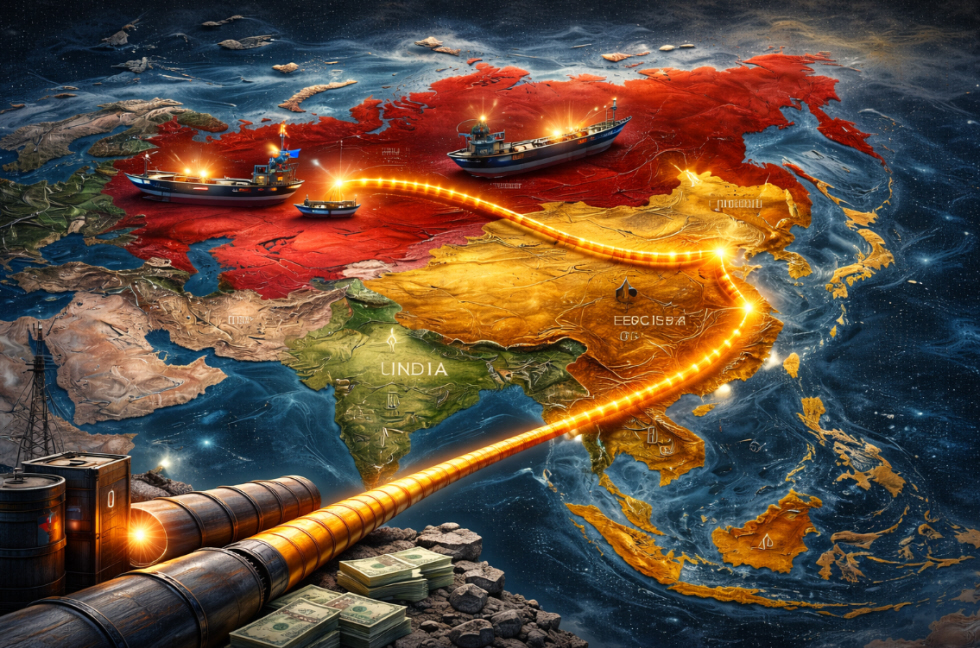
While sanctions reduced access to several European markets, Moscow redirected a significant share of its exports toward Asia, particularly China and India, which have increased their purchases of discounted Russian crude. Selling energy at reduced prices has allowed Russia to maintain steady revenue flows even under price caps and restrictions. Although profit margins may be narrower, the volume of exports has provided sufficient liquidity to sustain government spending, including military expenditures. At the same time, Russia has intensified what analysts describe as a wartime economic model.
Defense spending has expanded, and domestic arms production has been prioritized, supporting industrial output and employment tied directly to military needs. Financial reserves accumulated in previous years also played a stabilizing role during the early phase of the conflict. Despite the freezing of certain foreign-held assets, Russian authorities retained access to internal financial mechanisms that helped stabilize the currency and prevent immediate systemic collapse. Another key factor has been the rerouting of trade through intermediary countries.
Alternative supply chains have facilitated the import of certain technologies and strategic goods, partially offsetting the impact of Western export controls. Although the Russian economy faces structural pressure, it has not experienced the rapid breakdown some initially predicted. Strong state control over strategic sectors and centralized fiscal management have contributed to a degree of macroeconomic stability.
However, this model carries long-term risks. Greater dependence on a limited number of energy buyers, ongoing capital constraints, and sustained financial isolation may generate vulnerabilities over time. The war has also reshaped global economic alignments. Countries not participating in sanctions have assumed more prominent roles in energy trade, contributing to a gradual realignment of international market dynamics.
Four years into the conflict, the question of financing underscores the complexity of economic warfare. Sanctions have imposed significant strain, but Russia’s ability to adapt through energy revenues and trade restructuring continues to play a decisive role in sustaining its military strategy.