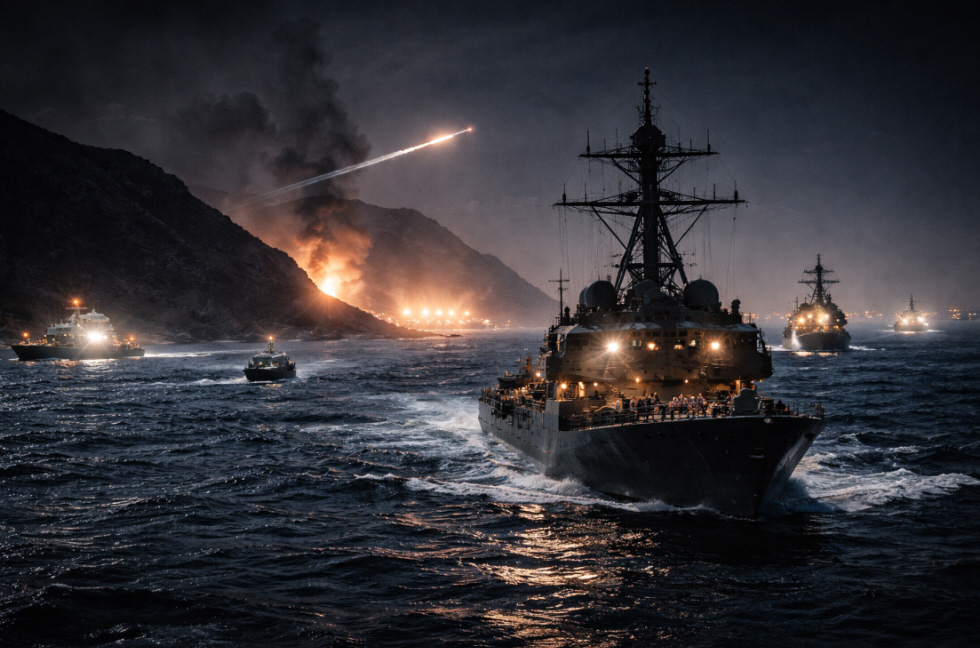
Maritime security in the Strait of Hormuz has become an urgent priority for the international community amid rising tensions in the Middle East. Senior military officials from multiple nations participated in a multinational meeting to assess risks in one of the world’s most strategic energy corridors. The current environment, shaped by prolonged conflict, has intensified global concern. The stability of this maritime route is critical for the international economic balance.
The meeting brought together representatives from numerous countries seeking to coordinate efforts to ensure safe navigation in the region. While specific participants were not publicly disclosed, the discussions were described as defensive in nature. The primary objective was to evaluate potential risk scenarios and containment measures. International cooperation has emerged as a key element in this critical moment.
The Strait of Hormuz, through which a significant portion of the world’s oil supply passes, is facing an increasingly fragile situation. Any disruption to this route could have immediate consequences for global energy markets. The potential restriction of commercial flow in this strategic area is raising concerns among governments and economic sectors. Every development in the region is being closely monitored. The participation of top military leaders reflects the seriousness of the situation and the need for coordinated responses. The presence of defense officials at this level underscores the heightened state of alert.
However, the overall tone has remained cautious, avoiding premature conclusions. The focus appears to be on prevention and constant surveillance. At the same time, regional tensions continue to evolve, adding further uncertainty to the outlook. Ongoing conflicts have turned the Strait of Hormuz into a highly sensitive geopolitical flashpoint. Decisions made in the coming days could have lasting consequences. The international community is seeking to prevent a broader escalation. From a strategic perspective, ensuring the safety of this maritime route requires not only military presence but also diplomatic coordination.
The defensive actions discussed aim to keep trade routes open without triggering direct confrontation. This delicate balance will be crucial in the next phase. Stability depends on multiple factors working in parallel. Energy markets are already reacting to the uncertainty surrounding the situation. Oil prices and supply chain security are directly tied to developments in this region. Governments and corporations alike are closely watching every move.
The global impact could be felt within a very short timeframe. Meanwhile, military authorities are maintaining a cautious stance regarding future actions. The priority is to avoid escalation that could further destabilize the region. International coordination remains active, although no concrete measures have been publicly announced. In this context, vigilance and diplomacy remain the primary tools.