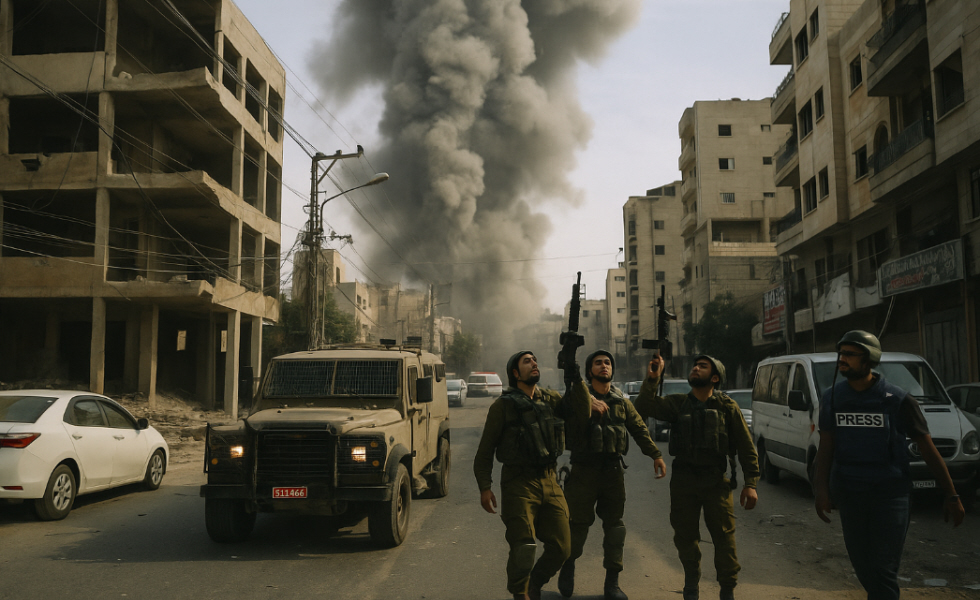
Israel has begun a large-scale mobilization of reservists as the country prepares for an intensified offensive in the Gaza Strip, marking one of the most significant escalations in recent months. Tens of thousands of reservists have been called up and are reporting for duty, signaling a new phase in the conflict as military leaders emphasize the need for expanded operations in urban areas of Gaza.
The mobilization comes as Israeli airstrikes have intensified, targeting what the government describes as militant infrastructure, while humanitarian groups report rising civilian casualties. According to official figures, more than one hundred people have been killed in Gaza in the past week, with thousands more displaced as neighborhoods are reduced to rubble.
The decision to increase troop levels has not come without controversy. Israel’s military chief has reportedly clashed with members of the cabinet over the scale and timing of the mobilization, with some ministers urging caution amid growing international pressure for restraint. The United Nations and several humanitarian organizations have expressed concern that expanded urban combat could lead to a significant surge in civilian deaths, while regional actors warn that the conflict risks spreading beyond Gaza if not contained.
Despite these warnings, Israeli leaders have framed the mobilization as a necessary step to dismantle militant networks and restore security following a wave of rocket attacks into southern Israel. The mobilization also highlights the strain on Israeli society, as reservists from across the country are being pulled from civilian life to join the war effort. Analysts note that this reflects not only the seriousness of the current escalation but also the government’s determination to project strength at a time of political divisions at home.
Public opinion in Israel remains split, with some citizens supporting decisive military action while others call for de-escalation and renewed diplomatic efforts. In Gaza, the humanitarian situation continues to deteriorate rapidly. Access to electricity, clean water, and medical supplies has become increasingly limited, raising fears of a looming crisis. International aid agencies are appealing for immediate humanitarian corridors to protect civilians caught in the fighting.
As the conflict enters this new and uncertain stage, global leaders are watching closely, with calls for restraint clashing against the realities of an expanding military campaign. The days ahead are expected to be critical in determining whether the situation stabilizes or spirals further into violence.