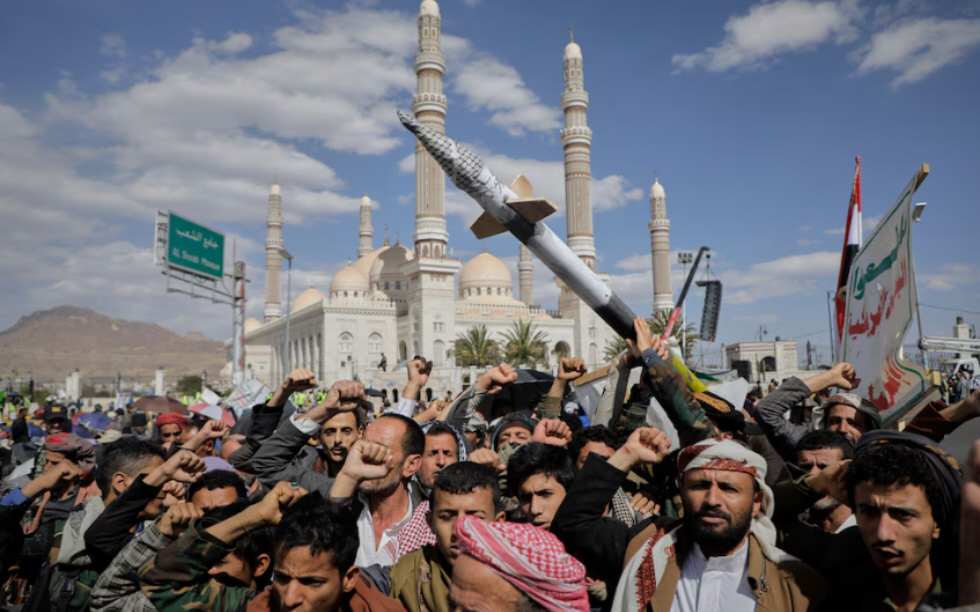
The United States' acting ambassador to the UN, Dorothy Shea, emphasized this Wednesday during a Security Council meeting that her country still considers Yemen's Houthi rebels a threat to regional stability and, therefore, supports their offensives in defense of its allies in the region, despite having agreed to a truce with the enemy. The pro-Iranian fighters are part of a "terrorist" group and pose "legitimate security concerns" for countries in the region, so the United States has not abandoned its commitment to stability in the region, despite recent agreements reached.
In the context of the escalating US aggression against terrorist and military targets in Yemen, and missile and drone attacks on Washington's military vessels in the Red Sea, the parties agreed to cease their actions in an attempt to partially restore calm. Shea considered this agreement as "a capitulation by the Houthis, which is a success for the United States" and which, in a certain way, shows that, "as President Donald Trump said, the Houthis no longer want to fight anymore, they are exhausted," although she stressed that this pact does not imply a total end to sanctions and the actions of their forces against the enemy.
"We are not going to accept illicit smuggling of fuel or war material to a terrorist organization. (We will continue) to hinder the illicit arrival of financial support and supplies into Houthi hands," she said in this regard. Even in line with this position, the official referred to the situation in Israel, one of its main allies in the area, and declared that the United States "supports its right to "We are working to defend ourselves against Iranian-backed terrorist groups, such as the Houthis," Shea said, referring to the ongoing attacks on the country. The day before, the Defense Forces intercepted another missile from Yemen, triggering air raid alerts in several parts of the country, including Jerusalem.
Previously, the Army had neutralized another missile launched from Sana'a, claimed by terrorist fighters, making two attacks in less than 24 hours. In retaliation, Israeli troops ordered the urgent evacuation "until further notice" of the Yemeni ports of Ras Isa, Hodeida, and Salif, thus anticipating attacks on the positions. “Because the Houthi terrorist regime uses seaports for its terrorist activities, we urge everyone present at these ports to evacuate and stay away from them for their own safety,” Israeli military spokesman Avichay Adraee wrote in a social media post.
Following these attacks, Prime Minister Benjamin Netanyahu threatened a response from Iran, which he holds ultimately responsible for financing the terrorists' operations. “President Trump is absolutely right. The Houthi attacks come from Iran. Israel will respond to the Houthi attack on our main airport, at a time and place of our choosing,” he said a few days ago. Defense Minister Israel Katz reiterated a few days later: “The Houthis continue to fire Iranian missiles at Israel. As promised, we will respond strongly in Yemen and wherever necessary.”