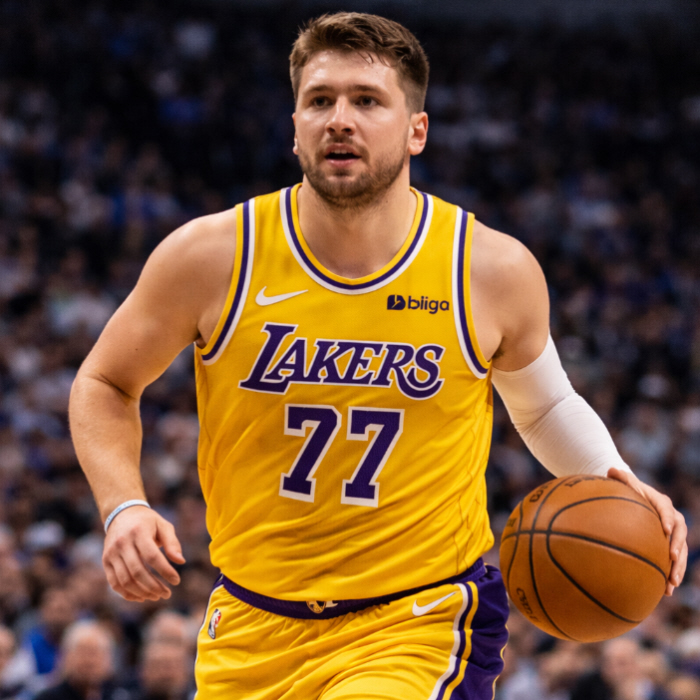
In professional sports, leadership is not proclaimed—it is exercised. And it is sustained by recent actions, not past achievements. In today’s NBA, where the competitive margin is razor thin, the role of the veteran loses weight when it no longer makes a real difference on and off the court. Respect inside a locker room is neither automatic nor permanent; it depends on the ability to influence the present. LeBron James is, without question, one of the greatest figures in basketball history.
However, at this stage of his career, his role no longer appears to be that of an internal disciplinarian or locker-room enforcer. His priority is clear: protecting his body, staying healthy, and extending his career. That is understandable—but it also carries consequences. A player who no longer dominates or wins consistently struggles to maintain moral authority inside a locker room filled with younger stars.
Within this context emerges Luka Dončić, an extraordinary talent who also invites deeper reflection. The argument that a player cannot be held accountable on defense because he delivers forty points on offense is, at best, incomplete. Basketball remains a two-way game, and professionalism should never be selective. There is little value in elite offensive production if the team gives up even more points on the other end. Defense is not a minor detail or a secondary task—it is a direct expression of commitment. When the franchise player fails to respond in that area, the message sent to the rest of the team becomes dangerous: responsibilities are negotiable based on status.
The issue is not the absence of strong voices on the bench, but the normalization of incomplete stars. No system can survive if its main reference refuses to embrace balance between offense and defense. Winning culture is not built on exceptions, but on clear, shared standards. Those of us who have competed at the professional level understand that games are not won solely through great offense. They are won through well-structured defenses, tactical discipline, and collective commitment.
This is not an opinion or nostalgia—it is a constant repeated across eras, leagues, and generations. Offense may decide a single night, but defense sustains an entire season. And when a team accepts imbalance—when it normalizes that a star contributes on only one side of the floor—the cost always arrives. Basketball, like any elite sport, rewards total effort and punishes concessions.
This was true yesterday, it is true today, and it will remain true tomorrow. Players change, styles evolve, but the fundamental truth does not: without defense there are no titles, and without commitment there is no real leadership.
By:
Williams Valverde.