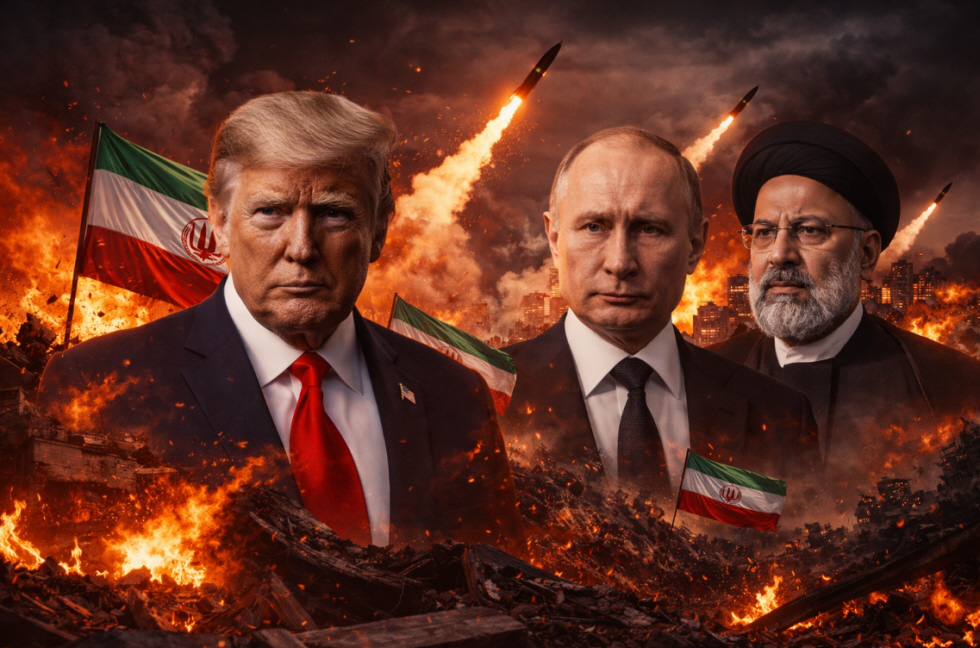
The recent escalation in the Gulf is not an isolated episode, but the visible result of years of accumulated tension. The deaths of American soldiers, combined with drone and missile attacks, point to a rapidly deteriorating security environment. What once seemed contained is now evolving into a broader and more dangerous confrontation. The United States has taken a firmer stance toward Iran, aligning closely with Israel in a dynamic that signals direct confrontation.
This shift reshapes the regional balance of power and increases the risk of a wider conflict. When major powers move away from restraint, diplomacy becomes increasingly fragile. Iran, on the other hand, appears to be operating under a strategy of calculated pressure. Its actions aim to raise the cost for Washington without fully crossing into open war. Each move is designed to signal strength while maintaining a level of ambiguity.
The targeting of strategic assets such as military bases and radar systems reflects a transformation in how conflict is conducted. This is no longer limited to deterrence, but rather a form of hybrid warfare combining precision and persistence. The battlefield has expanded beyond traditional lines. The loss of American personnel introduces a powerful emotional and political dimension. In Washington, such events often trigger calls for stronger responses and decisive action.
This creates a cycle in which escalation becomes increasingly difficult to contain. Diplomatic missions and embassies have also become symbolic targets. Striking these locations is not only about physical damage, but about sending a message of vulnerability and defiance. It is a conflict fought through signals as much as through force. Yet the most concerning developments may not be visible on the surface. Behind the scenes, external actors are beginning to shape the direction of events.
This is where the geopolitical stakes become significantly higher. The role of Vladimir Putin introduces a new layer of complexity. Through indirect influence, strategic positioning, or calculated pressure, Russia has the potential to reshape the balance of power. Its involvement does not need to be overt to be impactful. Moscow understands that prolonged instability weakens its strategic rivals.
In that sense, every escalation in the Middle East may present an opportunity to expand its geopolitical leverage. The conflict evolves from regional tension into global competition. At the same time, the risk of a broader confrontation is no longer hypothetical. A combination of miscalculations, retaliation, and political pressure could quickly spiral into a larger conflict. History has shown how easily such scenarios can unfold.
The international community watches with growing concern, aware that the consequences extend far beyond the region. Energy markets, global security, and political stability are all at stake. Every development in the Gulf resonates worldwide. Ultimately, what is unfolding is not just a clash between nations, but a test of an increasingly fragile global order. The key question is no longer whether tensions will rise, but how far the involved actors are willing to go.
Opinion | By:
Williams Valverde