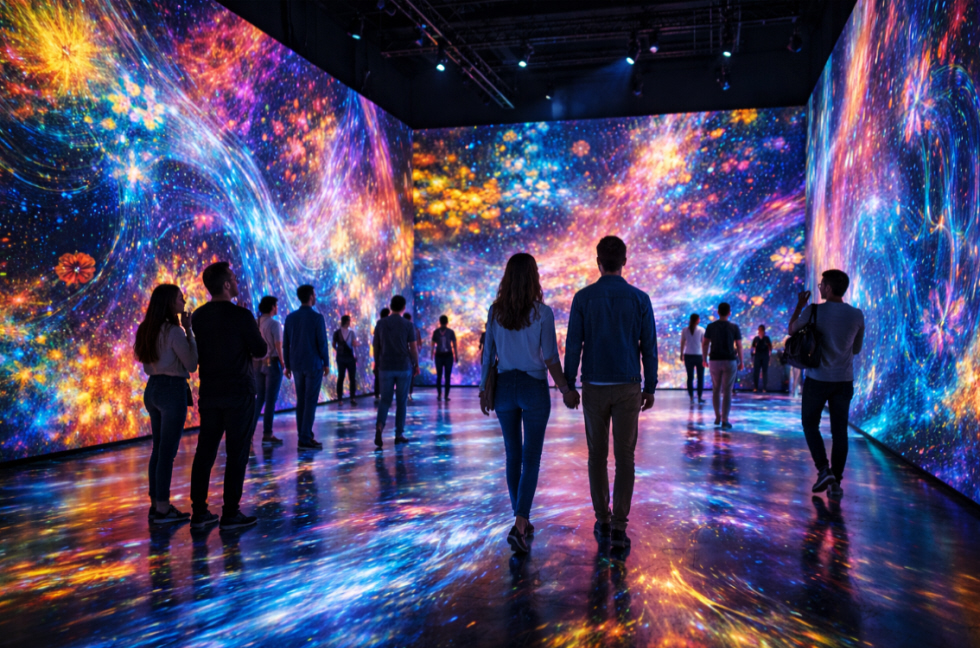
In recent decades, museums around the world have begun to undergo a profound transformation. What was once a quiet space dedicated mainly to observing artworks from a distance is gradually becoming a far more dynamic cultural experience. Interactive museums are redefining how visitors engage with art. Instead of simply standing in front of paintings or sculptures, visitors can now interact with installations that respond to movement, sound, or even human presence.
Digital technology has become a key tool in reshaping the artistic experience. Immersive projections, virtual reality rooms and environments where images surround the viewer are changing the traditional museum visit. Art is no longer experienced only through sight but also through movement and sensory interaction. This new approach aims to bring art closer to audiences who previously felt disconnected from traditional museums.
Many of these experiences are designed to be participatory, inviting visitors to become part of the artwork itself. The rise of interactive exhibitions also reflects a generational shift. Younger audiences, accustomed to constant interaction with digital devices and screens, increasingly seek cultural experiences that are engaging and immersive. In several cities around the world, new cultural spaces have emerged entirely dedicated to immersive art. Massive digital projections allow visitors to walk inside visual compositions that continuously evolve, creating a sense of depth and motion.
For many contemporary artists, this transformation represents a new creative language. Technology allows experimentation with light, sound, animation and programming, expanding artistic possibilities beyond traditional mediums. Museums have also discovered that these immersive experiences can attract new audiences.
Interactive exhibitions often become popular on social media, turning museums into dynamic cultural destinations visited by people of all ages. At the same time, the shift has sparked debate within the art community.
Some critics argue that the visual spectacle of immersive exhibitions could overshadow the deeper artistic value of traditional works. Despite these discussions, the growth of interactive museums suggests that art is entering a new phase, where technology and creativity merge to transform cultural spaces into more participatory and living experiences.