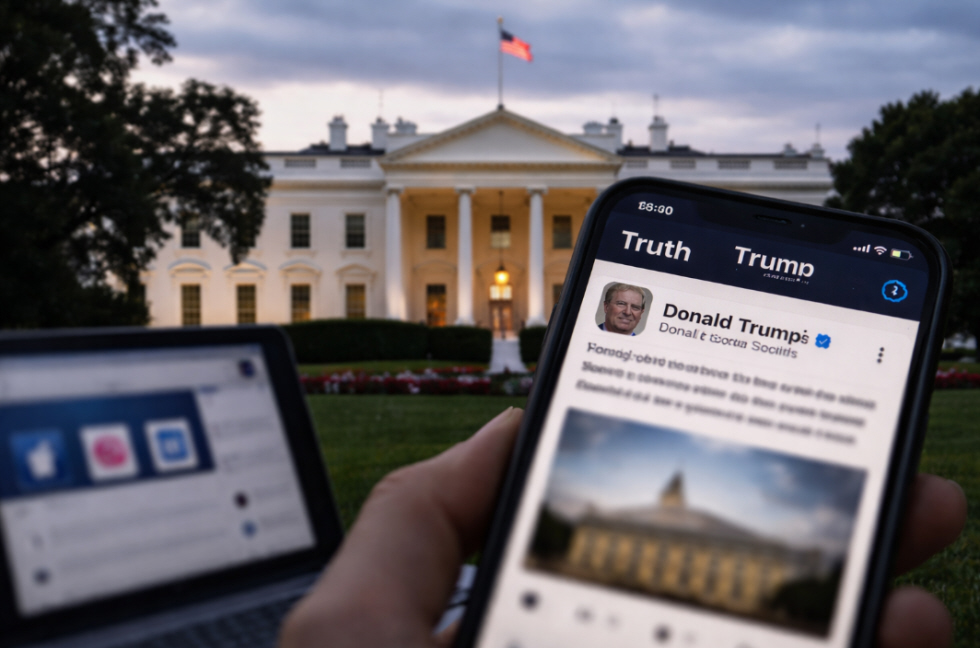
Content briefly posted on a social media account linked to U.S. President Donald Trump was removed after triggering widespread criticism for invoking racially offensive imagery long associated with the dehumanization of people of African descent. The incident has reignited debate over institutional responsibility and ethical standards in official digital communication. The White House stated that the post was uploaded in error by a staff member and was taken down once identified.
The clarification came hours after public backlash grew across political and civil society circles. The removed content was part of a political video repeating false claims about the 2020 presidential election. The controversy was intensified by the use of artificial intelligence–generated elements, raising concerns about the careless deployment of emerging technologies from accounts tied to executive authority. Initial responses from official spokespeople downplayed the criticism, describing it as exaggerated.
That reaction further fueled concern, until the post was ultimately deleted, a move widely seen as an acknowledgment of the seriousness of the mistake. Notably, criticism did not come solely from political opponents. Prominent figures within the Republican Party also voiced disapproval, stressing that the episode crossed unacceptable boundaries and violated basic principles of respect and dignity.
The case highlights the growing risks associated with the use of AI-generated content in political messaging, particularly when disseminated through channels with institutional reach. Analysts warn that such practices can accelerate misinformation and reinforce harmful stereotypes.
From a legal and ethical standpoint, the incident raises questions about accountability for public officials and their teams in overseeing content shared in the name of the state, even when errors are attributed to individual staff members.
Beyond the specific episode, the controversy underscores the urgent need for clearer standards governing official communication and the use of emerging technologies, in order to safeguard democratic norms and prevent the normalization of messages that undermine human dignity.