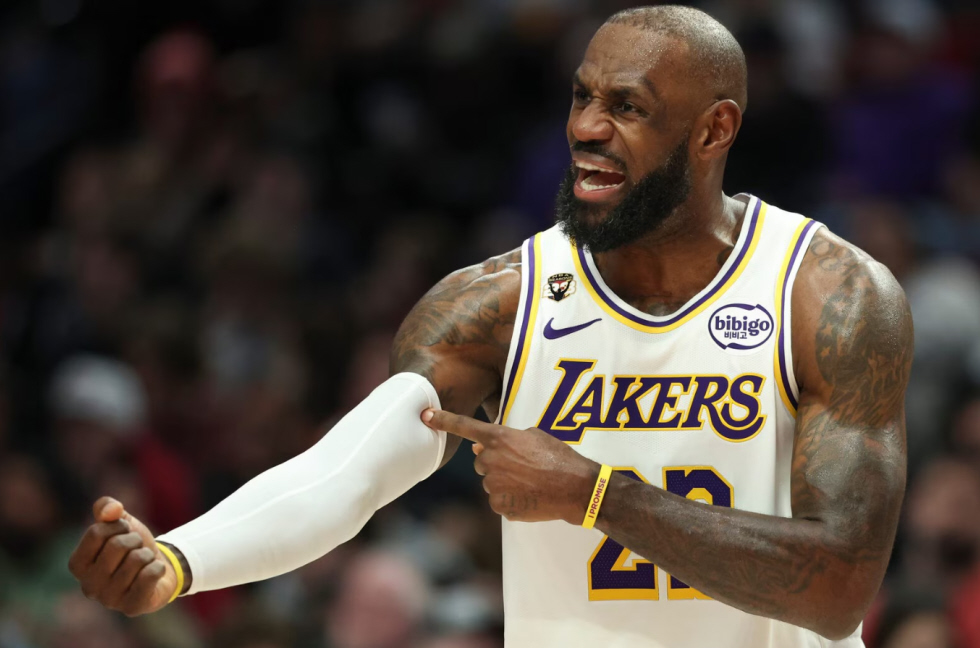
LeBron James was not named among the starting players for the NBA All-Star Game for the first time in more than two decades, a development that reflects a natural shift in the league rather than a symbolic break in his career. At 41 years old, the Los Angeles Lakers star remains a central figure, although the competitive landscape around him has continued to evolve. James’ absence from the list of the ten starters is closely linked to a season interrupted by physical setbacks.
The veteran missed the first 14 games of the campaign due to injury and needed time to regain rhythm and consistency, a factor that weighed heavily in the voting process. Despite not being selected as a starter, LeBron is not excluded from the event. He can still be chosen as a reserve by the coaches, keeping open the possibility of his participation in the All-Star Game scheduled for February 15 at the LA Clippers’ arena. In the Western Conference, the votes favored a mix of established leaders and emerging stars.
Luka Dončić topped the list, joined by Stephen Curry, Shai Gilgeous-Alexander, Nikola Jokić, and Victor Wembanyama, a group that highlights the generational transition taking place across the league. The Eastern Conference reflected a similar trend. Giannis Antetokounmpo led the voting alongside Jaylen Brown, Jalen Brunson, Cade Cunningham, and Tyrese Maxey, confirming the growing prominence of players who no longer revolve around historic icons. Beyond the voting outcome, James’ situation fits within a predictable sporting logic.
His role in today’s NBA is no longer defined by automatic recognition, but by his on-court impact and careful physical management throughout the season. The All-Star Game, increasingly shaped by recent performance and the rise of new stars, now serves as a snapshot of the present rather than a tribute to past achievements. In that context, LeBron’s initial absence does not affect his legacy or historical standing.
Rather than signaling an endpoint, this episode underscores a different phase of the four-time champion’s career, one in which expectations shift from constant protagonism to selective leadership, longevity management, and adaptation to a league driven by new reference points.
 Boston Celtics
 Denver Nuggets
 Milwaukee Bucks
 Phoenix Suns
 Golden State Warriors
 Los Angeles Lakers
 Miami Heat
 Dallas Mavericks