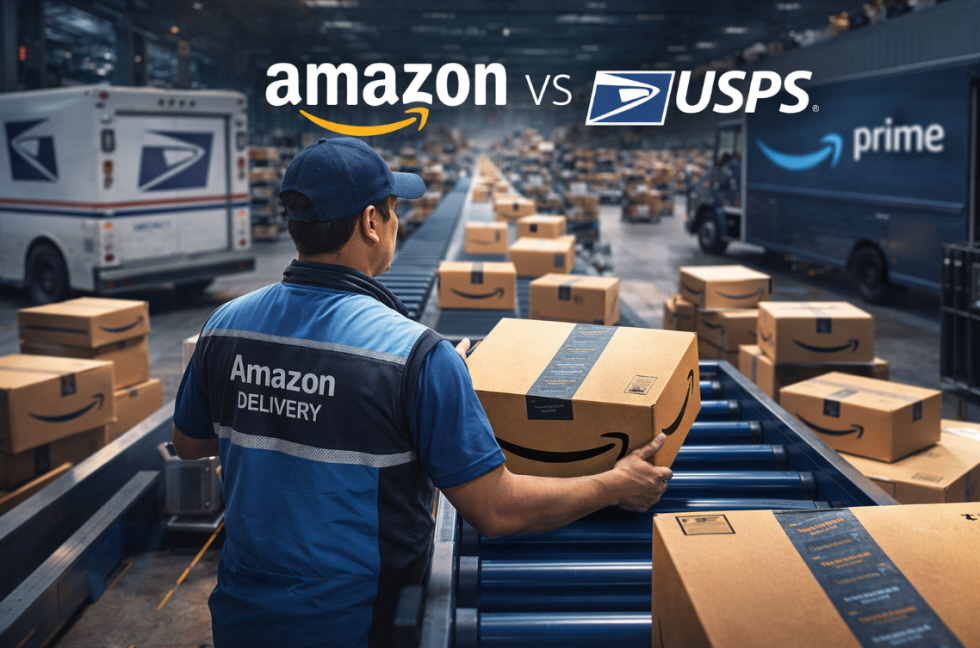
The e-commerce giant Amazon is reportedly preparing a major shift in its logistics strategy following failed contract negotiations with the United States Postal Service. According to reports, the company plans to cut at least two-thirds of the packages it currently delivers through the U.S. postal system. The move represents a significant blow to USPS, as Amazon is considered its largest customer and accounts for a substantial share of its annual delivery volume.
At present, the online retailer ships approximately 1.7 billion packages per year through the government-operated service. The adjustment in the commercial relationship is expected to take effect in September, when the current contract between both parties expires. The failure to reach a new agreement has reportedly pushed Amazon to rethink its distribution model.
This shift reflects Amazon’s broader strategy of strengthening its own delivery network, reducing dependence on third-party carriers. In recent years, the company has invested heavily in logistics infrastructure, including warehouses, transportation fleets, and last-mile delivery systems. The decision could have direct implications for operational costs and delivery speed, two critical factors in the highly competitive e-commerce market.
Amazon’s reputation has been built on fast and reliable shipping, making efficiency a constant priority. For USPS, the potential reduction poses a serious financial challenge, as losing a major portion of Amazon’s volume could impact revenue and operational stability. The postal service has relied heavily on the growth of e-commerce to sustain its business in recent years.
Industry analysts suggest that this move could accelerate changes in the U.S. logistics sector, where large companies are increasingly bringing delivery operations in-house to improve control and reduce costs. The contractual dispute also highlights the tension between large corporations and public service providers when large-scale agreements affect millions of daily shipments.
As the contract expiration approaches, attention will focus on how delivery volumes are redistributed and what impact this will have on pricing and service speed for consumers. For now, Amazon’s decision marks another step in the evolution of modern logistics, where efficiency, speed, and direct control are becoming key competitive advantages in the global marketplace.