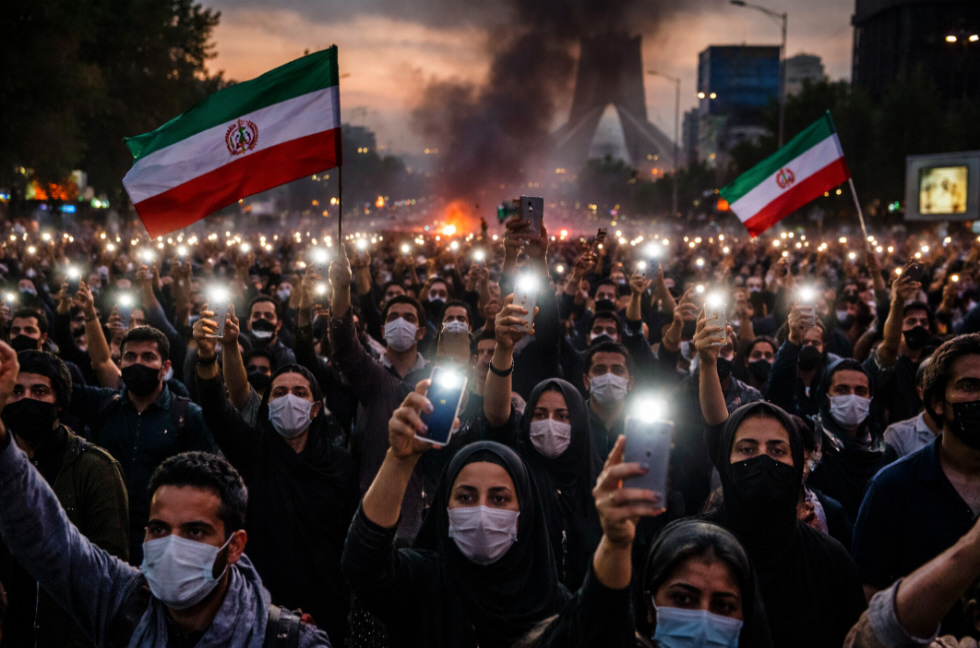
Since Thursday, Iran has been experiencing a near-total internet blackout, a measure implemented by authorities to restrict communication among protesters who have taken to the streets demanding political change and to limit the flow of information beyond the country’s borders. The shutdown includes widespread internet disruptions and, in some areas, partial interruptions of telephone services.
The move by Iranian authorities is widely seen as an effort to hinder coordination among demonstrators and prevent the circulation of images, videos, and reports documenting the scale of the protests. In previous instances, similar blackouts have been used to isolate the population and reduce international scrutiny during periods of internal unrest. Amid this situation, the possibility of U.S. assistance through satellite-based internet access has emerged.
When asked whether his administration would consider enabling Starlink services in Iran, U.S. President Donald Trump said the issue is under review and that options are being explored to restore connectivity if technically feasible. Trump later indicated that he planned to speak with technology entrepreneur Elon Musk, whose company SpaceX operates Starlink, currently the world’s largest satellite internet provider.
In theory, such a system could offer an alternative link to the outside world, provided that the necessary terminals are available within Iran. The U.S. president has repeatedly voiced political support for participants in the ongoing protests against Iran’s authoritarian leadership. In recent remarks, he emphasized that Washington is closely monitoring developments and treating the situation in Iran as a matter of serious concern.
According to Trump, the U.S. government is receiving frequent updates on events inside the country and is evaluating a range of possible responses. These include diplomatic and economic measures, as well as other actions that would not necessarily involve direct military intervention. At the same time, Iranian authorities have warned of potential counterattacks should the United States take hostile steps in support of the protest movement, citing possible targets such as U.S. military installations in the Middle East.
These warnings have contributed to rising regional tensions and heightened international attention. In response, Trump stated that any attack on U.S. interests would be met with a strong reaction. The unfolding situation highlights a fragile balance between political pressure, technological tools, and the risk of military escalation, at a moment when control over information has become a central element of the broader conflict.