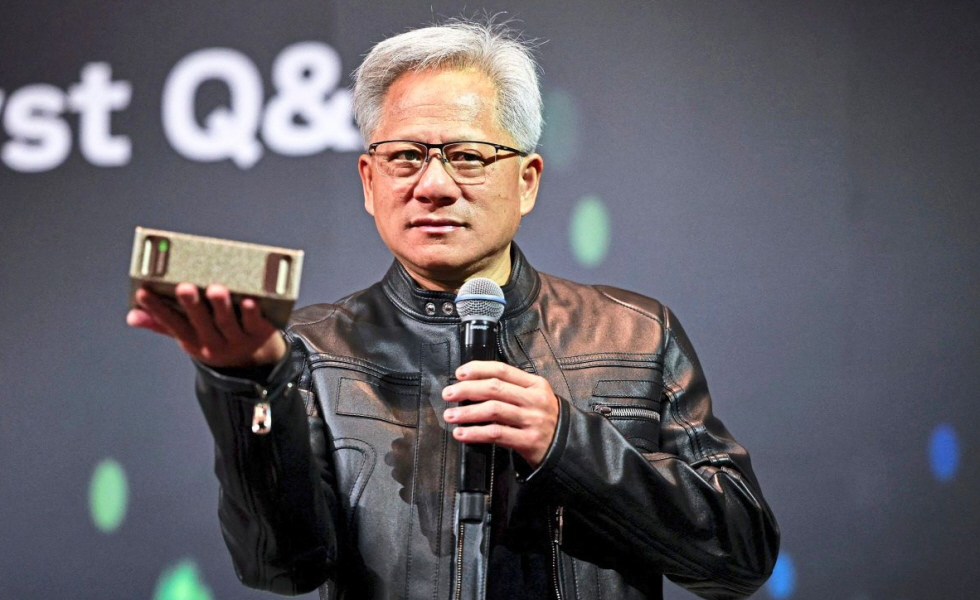
There is little doubt about Jensen Huang’s abilities: the head of Nvidia has not only turned his company into the most valuable in the world at the moment, but he also seems to know exactly how to wrap the President of the United States, Donald Trump, around his little finger. Just a few weeks ago, Huang made an announcement that was both unexpected and monumental: Nvidia is once again allowed to sell its H20 chips—highly sought after for the development of AI models—in China.
This marked a complete reversal in the United States' artificial intelligence strategy. Whereas the previous policy had firmly aimed to keep China away from powerful hardware in the race for the best AI models, Washington now appears to be aligning with Nvidia’s business interests: it is better to maintain dominance through superior hardware. In other words, rather than letting China strengthen its domestic chip development—something it had been doing increasingly—Washington would rather have it rely on Western hardware.
This abrupt policy shift has sparked speculation in China, where some are beginning to question whether entirely different motives lie behind the U.S. decision. A Chinese government official suggested that Nvidia's chips might contain backdoors accessible by the U.S. government. According to this view, the loosening of export restrictions could serve as a Trojan horse for espionage operations in the AI sector.
Fueling these suspicions is a new U.S. legislative proposal: the CHIP Security Act, introduced in May 2025. The bill seeks to require AI chips to include some form of location tracking to determine where the hardware ends up—especially if trade restrictions are bypassed. Moreover, it would obligate chipmakers to implement systems that block any attempts at modification.
Further intensifying Chinese skepticism is the fact that Nvidia’s H20 chip is manufactured exclusively for the Chinese market. While the H20 falls significantly short of Nvidia’s top-tier chips in terms of capability, reports claim that companies like Deepseek have already used it to build powerful AI models. In any case, Nvidia has firmly rejected the allegations.
“Cybersecurity is essential to us,” said the company, which also emphasized that it has not installed any backdoors in its chips that could enable unauthorized external access. It’s worth noting that the CHIP Security Act remains only a proposal—it is still unclear whether it will be enacted, and if so, in what form. Still, that explanation is not enough for the Chinese government. Officials there continue to demand “credible security evidence” to allay their concerns.