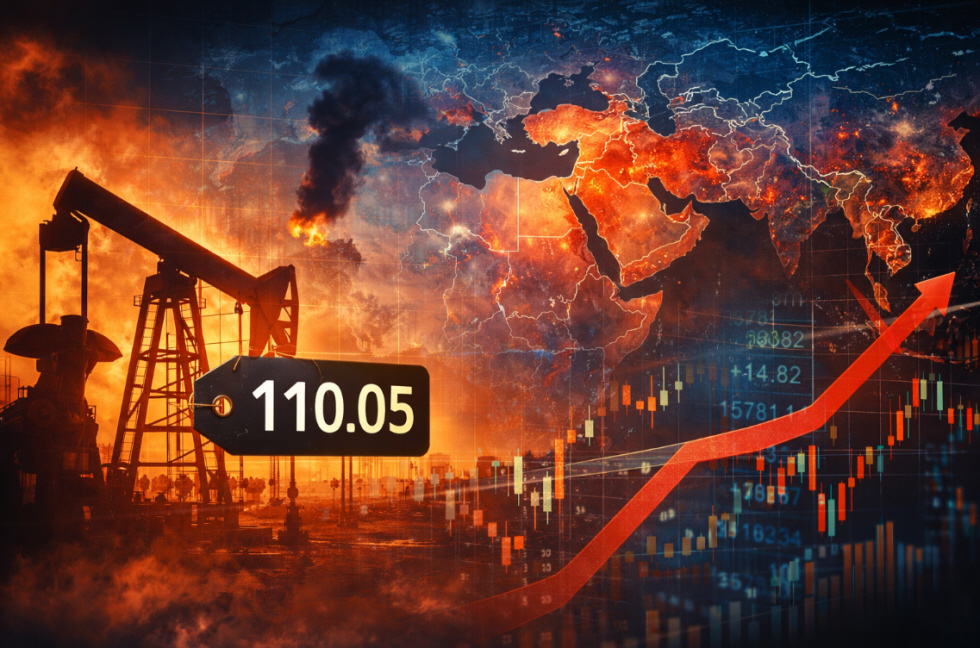
The global energy market has once again taken center stage as oil prices surge amid escalating tensions in the Middle East. What may appear to be a market reaction is, in reality, a clear reflection of how geopolitics is reshaping the balance of global economic power. The rise in crude prices does not only affect consuming nations—it also redefines the influence of major energy producers.
Every additional dollar per barrel strengthens certain strategic players while placing increased pressure on economies heavily dependent on energy imports. The Strait of Hormuz, one of the world’s most critical oil transit routes, has once again become a focal point of vulnerability. Any disruption in this corridor carries the potential to trigger a domino effect across global supply chains, impacting regions from Asia to Europe.
At the same time, financial markets are reacting with heightened volatility as geopolitical risk intensifies. Investors are shifting toward safer assets, while energy-sensitive sectors begin to show early signs of strain. European economies are facing a particularly challenging environment. Rising energy costs are driving up production expenses, weakening industrial competitiveness, and putting pressure on key sectors.
Meanwhile, Asia is experiencing growing strain on its energy stability. Highly industrialized economies rely on steady resource flows, and any disruption directly affects their pace of growth and economic momentum. The United States, on the other hand, finds itself in a relatively stronger position. Its domestic energy production capacity allows it to absorb part of the shock while reinforcing its strategic influence on the global stage.
Beyond energy, this environment is accelerating major corporate decisions. Multinational companies are rethinking supply chains, aiming to reduce exposure to geopolitical risks and ensure long-term stability. In parallel, technology continues to emerge as a second major axis of power. Investments in artificial intelligence, digital infrastructure, and automation are expanding rapidly, shaping the future of global economic competition.
The world is entering a phase where energy, geopolitics, and technology are deeply interconnected. What is at stake is not only the price of oil, but the definition of global economic power in the years ahead.