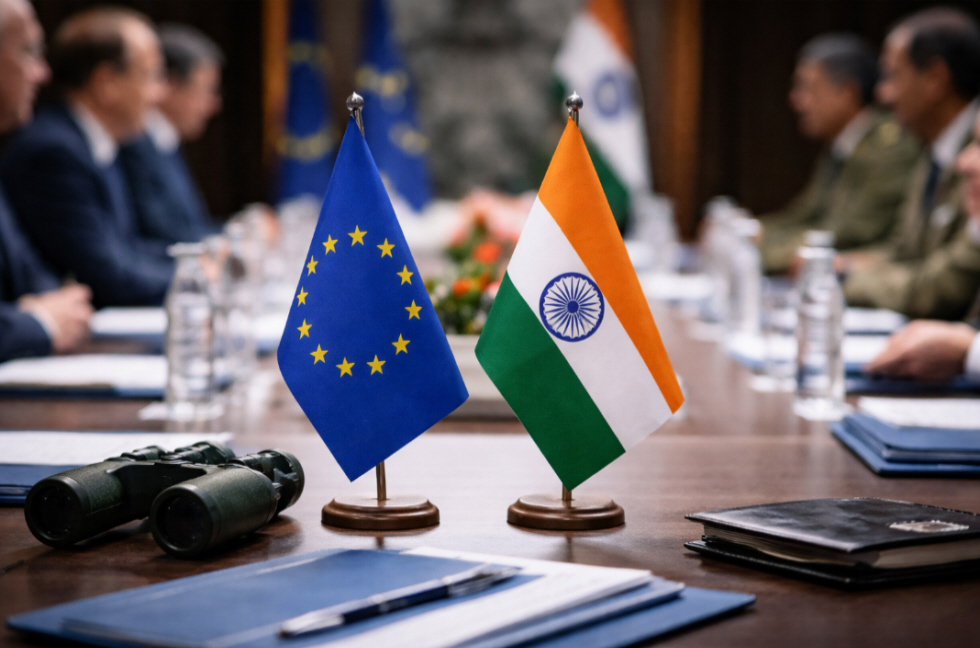
The European Union and India have taken a significant step toward deepening cooperation in security and defense, signaling how the shifting global order is pushing key actors to strengthen strategic partnerships beyond purely economic ties. The new understanding was sealed in New Delhi alongside progress on a free trade agreement between the two sides.
While the document is not legally binding, its contents clearly outline a meaningful political direction in relations between the Union and the world’s most populous country. The partnership envisions closer collaboration in sensitive areas such as regional security, defense policy, and potential joint arms-related projects, reflecting shared concerns about an increasingly unstable international environment. For Brussels, the move represents an effort to diversify strategic partners and reduce vulnerabilities in a global landscape shaped by growing tensions among major powers.
For New Delhi, it offers an opportunity to strengthen defensive capabilities while expanding diplomatic flexibility. The agreement also highlights a more pragmatic approach on both sides. Long-standing differences in foreign policy, particularly regarding Russia, have been temporarily set aside in favor of shared security interests and broader strategic objectives. This convergence does not imply full alignment. Instead, it reflects selective cooperation built around common goals, allowing both the European Union and India to safeguard their interests while maintaining strategic autonomy.
The document further emphasizes coordination in areas such as cybersecurity, protection of critical infrastructure, and crisis management—fields that have gained increasing importance in today’s complex security landscape. Politically, the partnership sends a clear message to other global actors: both the EU and India are prepared to take a more active role in shaping their security environment, including engagement in sectors traditionally considered highly sensitive.
The speed with which the understanding has progressed underscores the pressure felt by both partners to adapt to a more fragmented world, where traditional security guarantees are no longer sufficient. Taken together, the new framework for EU–India cooperation illustrates how global power dynamics are evolving toward flexible, pragmatic alliances, with security and defense emerging as central pillars in relationships once defined primarily by trade.