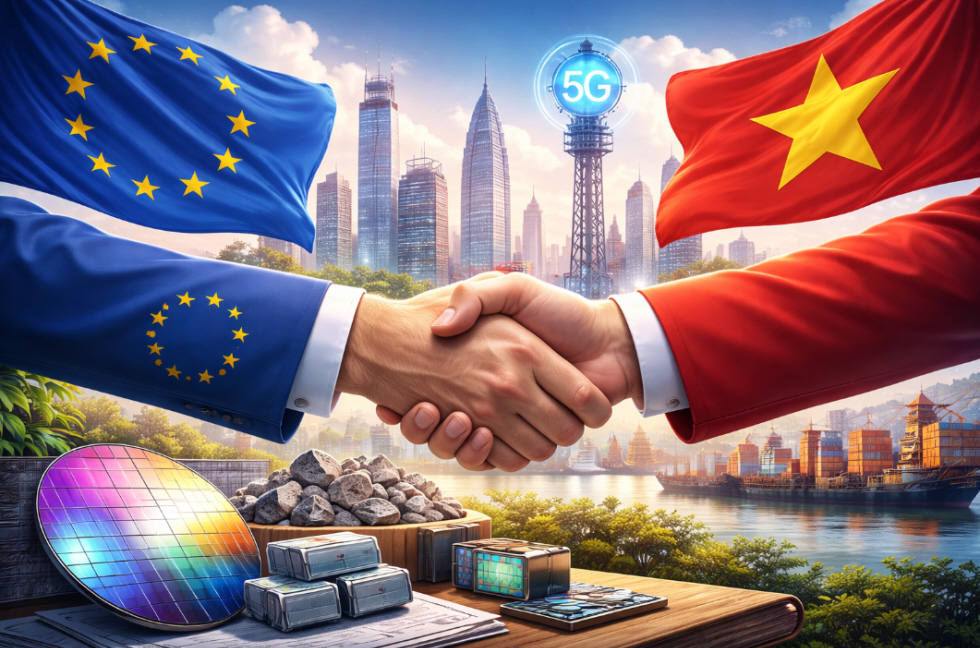
The European Union is moving forward with a strategy to diversify its global economic partnerships in response to rising trade tensions with the United States and China. Within this framework, Vietnam is emerging as a key partner in sectors considered critical to Europe’s economic future. Brussels and the government in Hanoi are working on a broad agreement covering strategic raw materials, semiconductors, and infrastructure.
The central goal is to reduce dependence on dominant markets while strengthening more resilient supply chains. Vietnam holds significant reserves of rare earth elements and gallium, resources essential to the technology and energy industries that have largely been controlled by China. The European Union is seeking access to these materials through cooperation and targeted investment. The draft agreement includes plans to promote mining and processing projects that meet sustainability standards, a core requirement for the EU. The initiative aims to secure reliable supply while maintaining environmental commitments.
Another key pillar of the partnership is semiconductors. Vietnam has become an important hub for chip packaging and testing, hosting major international companies, and is now moving toward establishing its first domestic semiconductor manufacturing facility. Vietnam’s industrial transformation has also attracted European suppliers involved in advanced manufacturing equipment, further strengthening the EU’s interest in deepening technological cooperation. The agreement also outlines investments in strategic infrastructure, including 5G networks, satellite connectivity, and railway projects.
These developments are designed to enhance Vietnam’s digital and logistical capacity, facilitating bilateral trade. Beyond economics, the framework carries a clear political dimension. The European Union reiterates its support for a rules-based international order and the role of multilateral institutions such as the World Trade Organization. Vietnam’s growing role fits into a broader EU strategy to expand its network of trade partnerships.
At the same time, Brussels has intensified negotiations with other Southeast Asian nations, Middle Eastern partners, and key countries in Latin America. In a global landscape increasingly shaped by economic fragmentation, Europe’s engagement with Vietnam reflects a drive to balance competitiveness, supply security, and strategic autonomy, all of which are becoming decisive factors in international economic policy.