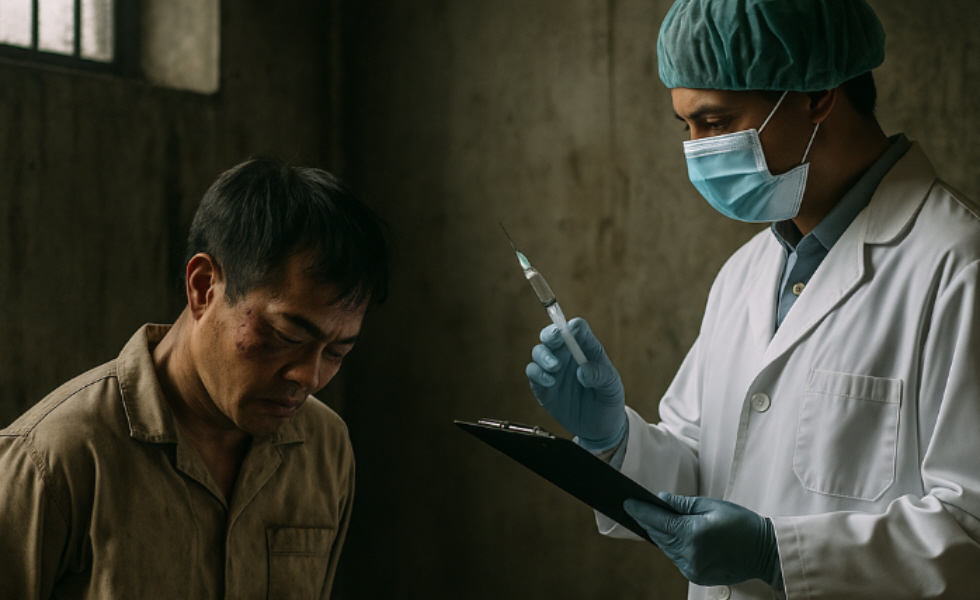
A United Nations committee has raised international alarm after presenting credible reports that North Korea is conducting medical and scientific experiments on human beings, particularly on individuals with disabilities. The findings, revealed in Geneva, describe deeply inhumane practices such as forced sterilizations, compulsory abortions, and the killing of newborns with visible disabilities or deformities.
According to the reports, these actions allegedly took place in pediatric institutions and detention centers, where patients were subjected to clinical tests without their free and informed consent, in blatant violation of international human rights standards. The committee expressed “grave concern,” noting that these policies do not appear to be isolated incidents but rather part of an institutional system designed to eliminate people with physical, intellectual, or psychosocial disabilities.
Testimonies collected by activists and defectors confirm that children with visible conditions were often separated from their families and sent to state facilities, from which many never returned. UN experts also condemned reports of state-sanctioned infanticide, pointing to a systematic intent to silence and eradicate the most vulnerable members of North Korean society. In response, the committee urged Pyongyang to immediately criminalize all medical experiments on persons with disabilities, establish independent monitoring mechanisms, and ensure reparations for victims and their families.
They emphasized that bodily integrity and personal autonomy must be recognized as inalienable rights, and that the use of human beings as “test subjects” constitutes a crime against humanity. These revelations add to a long history of accusations of systematic abuses in North Korea, including torture, forced labor, and biological experimentation on political prisoners.
While for decades many of these claims came mainly from defectors, validation by an international body such as the UN now gives these allegations significant credibility. Human rights organizations argue that, if fully confirmed, such practices could trigger action in international courts and intensify diplomatic pressure on Kim Jong-un’s regime. The international community, still constrained by the lack of direct access to North Korea, now faces the challenge of responding to allegations of such magnitude.
Experts warn that beyond existing economic sanctions, stronger multilateral pressure and independent monitoring mechanisms are needed to prevent these practices from continuing in secret. Meanwhile, victims remain invisible, trapped in a system that silences dissent and denies transparency, making these reports an urgent call for global action.