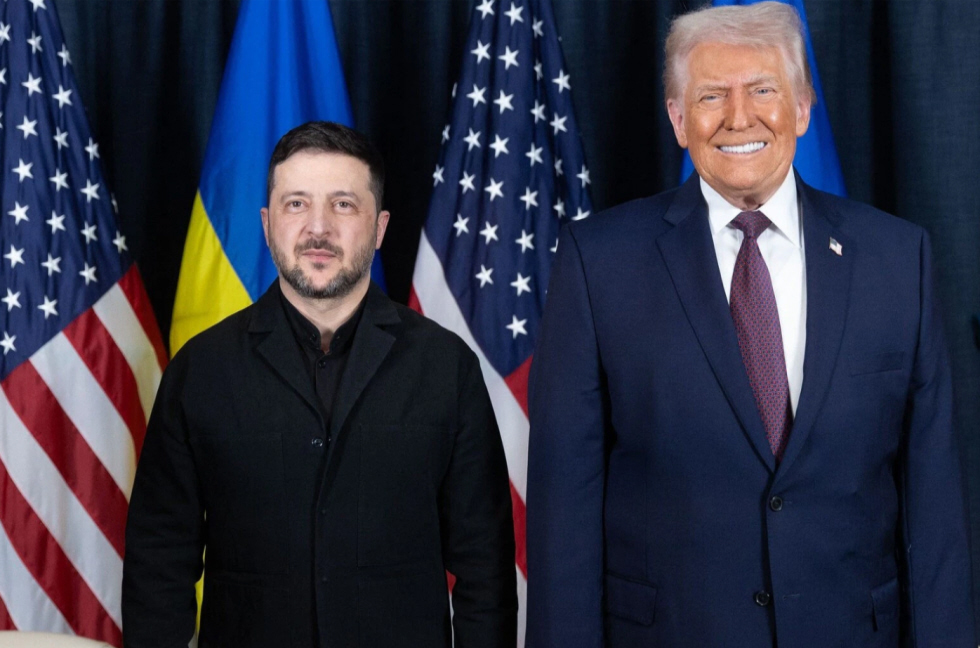
Ukrainian President Volodymyr Zelensky once again delivered a firm and confrontational message following his brief meeting with U.S. President Donald Trump during the World Economic Forum in Davos, Switzerland. The encounter, held amid an increasingly tense geopolitical climate, left more questions than answers about the immediate future of the conflict in Eastern Europe. Trump had encouraged Zelensky’s presence in Davos, despite the Ukrainian leader not originally planning to attend the forum.
Zelensky ultimately arrived in the Swiss resort town on short notice, although the meeting with the American president was short and, according to observers, unsatisfactory for the Ukrainian delegation. Following the meeting, Zelensky significantly toughened his public rhetoric. He directed criticism not only toward Europe but also sent implicit messages aimed at Trump’s position, making clear his frustration with what he views as a lack of clear commitment from Western allies.
In his speech, Zelensky warned European nations against assuming that the United States would automatically intervene if Russia were to attack a NATO member state such as Poland. In his view, relying on that assumption would be a serious and dangerous mistake for Europe’s security. The Ukrainian president once again insisted on the need to create a European army that would include Ukraine’s armed forces. According to Zelensky, Europe must be prepared to act decisively and collectively on land, at sea, and in the air.
“There is no tomorrow without action,” he said, emphasizing the urgency of a stronger response. Indirectly, Zelensky urged European countries to become more deeply involved in the conflict, arguing that inaction amounts to a form of complicity. He even linked Europe’s passivity to other international crises, such as the mass protests in Iran, remarks that caused discomfort among several diplomatic circles. Meanwhile, Donald Trump continues to push for an end to the war in Ukraine through negotiations.
The U.S. president has stated that the positions of Kyiv and Moscow are not as far apart as often believed and that an agreement remains possible if both sides demonstrate political will. Against this backdrop, a trilateral meeting is expected to take place for the first time this Friday in the United Arab Emirates, bringing together representatives from the United States, Russia, and Ukraine. The talks are widely seen as a key attempt to revive dialogue and explore a potential diplomatic path toward ending a war that continues to shape the course of international politics.