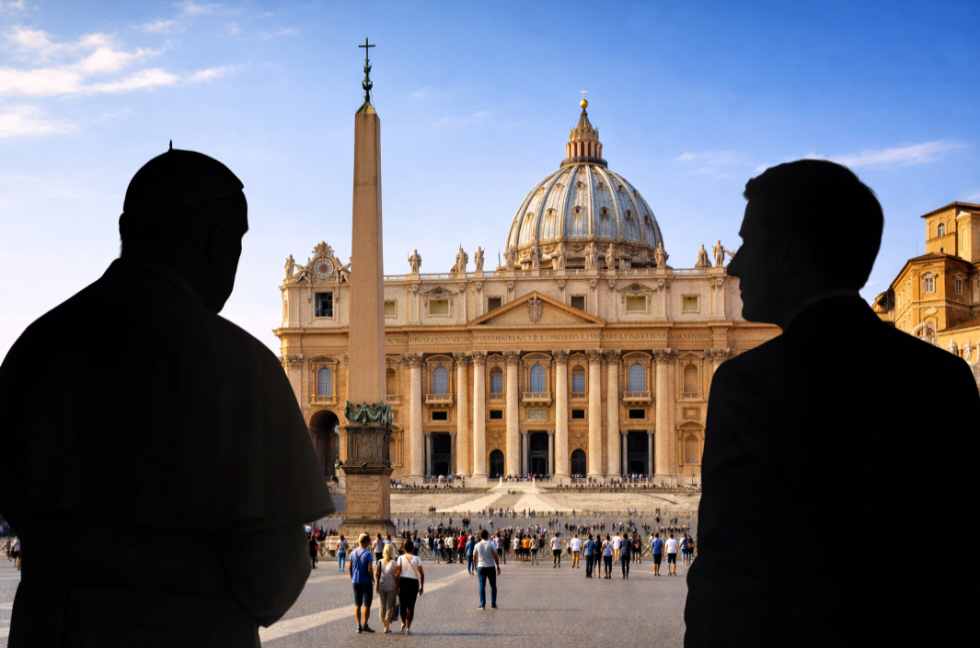
Diplomatic sources suggest that France has so far been unable to secure an audience between President Emmanuel Macron and Pope Leo XIV, despite efforts made in recent weeks. At this stage, there has been no official confirmation from the Vatican regarding either a private meeting or an audience as part of a potential state visit by the French leader.
According to these accounts, the absence of a scheduled meeting stands in contrast to audiences recently granted to other European heads of state, including leaders from Italy, Germany, Spain, and the United Kingdom, prompting questions within political and diplomatic circles about the reasons behind the lack of engagement. The apparent distance is widely seen as linked to deep ideological differences on ethical and social issues, particularly abortion and euthanasia.
In March 2024, France enshrined what it describes as a “right to abortion” in its constitution, a move strongly promoted by President Macron and approved by the French parliament. At the same time, Macron has openly supported a more liberal legal framework for euthanasia, a debate that remains ongoing in France and has drawn criticism from religious institutions and conservative groups both domestically and abroad. Pope Leo XIV has recently reaffirmed the Catholic Church’s firm stance on both issues.
In a New Year address, the pontiff reiterated the Church’s categorical rejection of abortion and criticized the use of public funds for practices that, in his words, “destroy life instead of supporting mothers and families.” In the same address, the pope described euthanasia as “a false form of compassion,” reinforcing long-standing Church doctrine on the protection of life from conception to natural death.
These remarks have strengthened perceptions of a clear ideological divide between the Vatican and the current French leadership. So far, neither the Holy See nor the Élysée Palace has issued an official statement explaining the absence of a papal audience, leaving the matter within the realm of diplomatic interpretation rather than confirmed institutional decision.
The episode highlights broader tensions between politics and religion in Europe, as debates over values, rights, and moral authority continue to shape relations between governments and religious institutions, with implications that extend well beyond national borders.