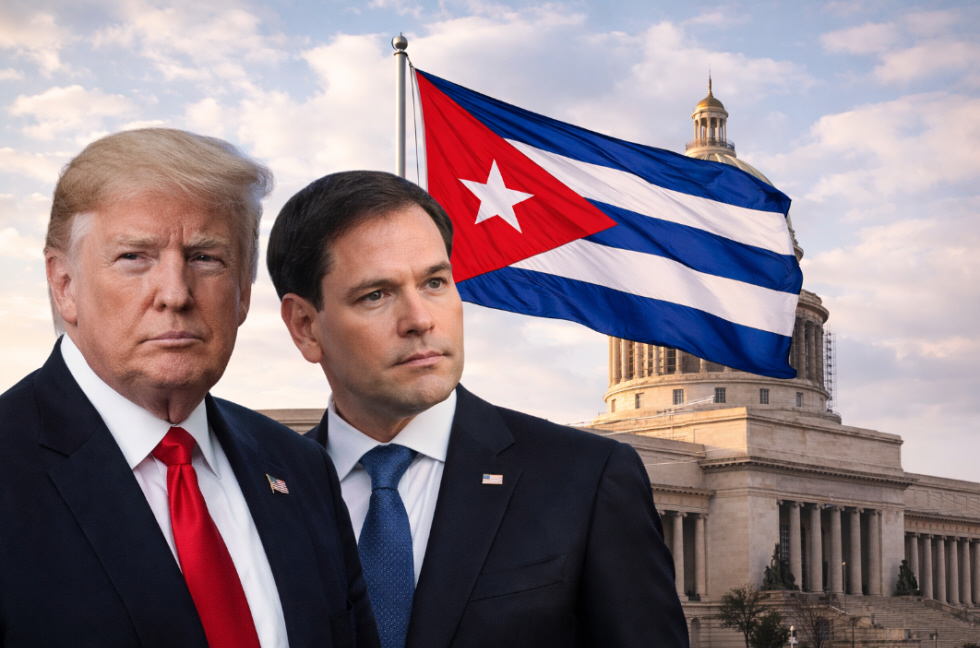
The administration of U.S. President Donald Trump is reportedly considering a significant tightening of its policy toward Cuba, a move that some analysts interpret as an effort to push the island’s leadership toward political change. The reports have gained momentum following the recent U.S. operation in Venezuela, which altered regional dynamics and heightened tensions across the Caribbean.
If such a shift were to materialize, Cuba would move to the center of Washington’s strategic focus in the Western Hemisphere, as it is widely viewed by U.S. officials as the last remaining communist regime in the region. However, no official plan or timeline for any form of intervention has been publicly announced. According to multiple assessments, discussions in Washington revolve around increasing political, economic, and diplomatic pressure on Havana. These considerations come at a time when Cuba is facing deep economic strain, marked by shortages, inflation, and sustained outward migration.
Secretary of State Marco Rubio has emerged as one of the most outspoken voices within the administration on the issue. In early January, he stated that Cuba’s leaders face a clear choice: pursue reforms that allow economic prosperity or continue along a path that, in his words, leads toward social collapse. Within Trump’s inner circle, the fall of Venezuela’s former government is viewed as a powerful political signal to other authoritarian regimes in the region. In this context, Cuba is seen as both a strategic and symbolic case, given its long-standing confrontation with the United States dating back to 1959.
At the same time, there are differing views inside the U.S. administration. Some officials and analysts warn that an aggressive escalation could generate regional instability, trigger additional migration flows, and strain relations with European and Latin American allies. So far, there has been no confirmation that military action is under consideration. Publicly discussed options have focused instead on sanctions, economic restrictions, and diplomatic pressure—tools that Washington has employed in the past with mixed results.
From Havana, the government led by President Miguel Díaz-Canel has consistently rejected any form of external interference. Cuban authorities maintain that there are no formal negotiations with Washington and argue that U.S. pressure is aimed at destabilizing the country. The renewed focus on Cuba also comes during a politically sensitive year in the United States, with midterm elections on the horizon.
Analysts note that U.S. policy toward Latin America can carry domestic political implications, particularly in states with large Cuban-American communities. For now, the situation remains fluid. Signals from Washington suggest a willingness to increase pressure, but the absence of concrete decisions leaves room for multiple interpretations. What appears increasingly clear is that Cuba has returned to a prominent place on the U.S. strategic agenda, amid a rapidly shifting and uncertain regional landscape.