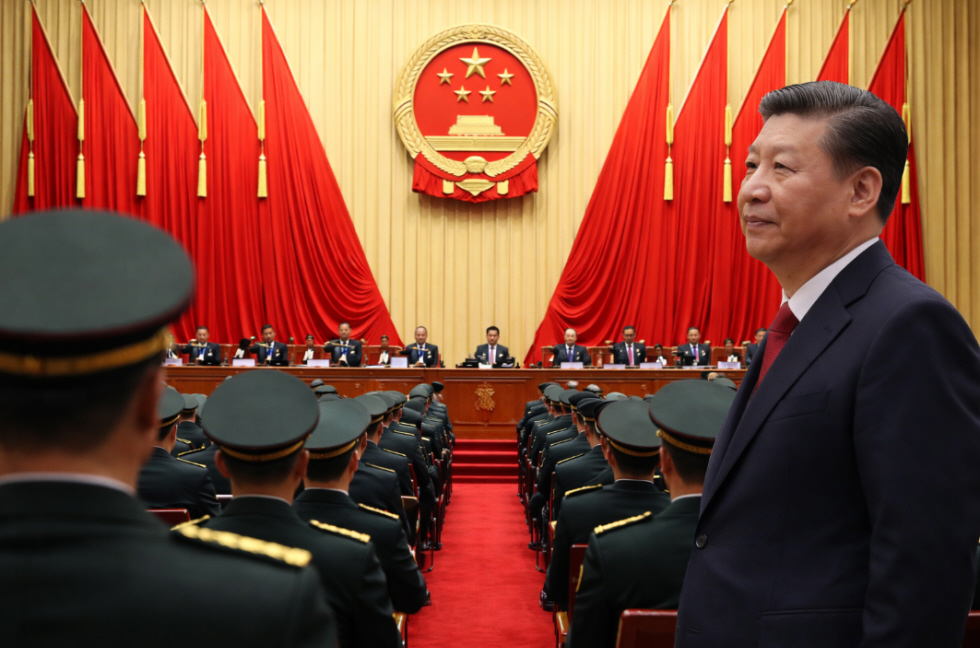
China’s Central Military Commission stands at the very center of the country’s political and military power. As the body overseeing the command and administration of the armed forces, its composition offers a direct window into the balance of authority within the Chinese system. Following the Communist Party’s leadership reshuffle in October 2022, the commission was presented as a consolidated seven-member structure under the leadership of President Xi Jinping.
At the time, it was portrayed as a symbol of continuity, control, and institutional stability. That image has since changed dramatically. Of the seven senior figures originally announced, only two remain in their positions today, one of them being Xi himself. The reduction signals a significant transformation within one of China’s most powerful governing bodies.
The most recent development involves the removal of Vice Chairman Zhang Youxia, a senior military figure who also held the role of commander-in-chief. His dismissal marks one of the most high-profile changes within the commission since the reshuffle. Chinese authorities have stated that Zhang has been charged with “serious violations of the law and disciplinary violations.” Such language, commonly used in official announcements, typically reflects internal investigations tied to party discipline and governance standards.
The announcement was delivered without further public detail, consistent with China’s longstanding practice of limiting transparency in matters related to internal military and political discipline. No timeline or procedural specifics have been disclosed. Zhang’s departure further concentrates authority within a much smaller leadership circle. With only two members remaining from the original lineup, the commission now reflects a far narrower distribution of decision-making power.
This contraction comes at a time when China faces growing external pressures and complex security challenges, making stability within the military command structure particularly significant. Any shift at this level inevitably draws close attention. Internally, the changes underscore the ruling party’s continued emphasis on discipline, loyalty, and centralized control within the armed forces.
The commission’s evolution suggests an ongoing recalibration of power rather than a routine personnel adjustment. As the situation develops, the reconfiguration of the Central Military Commission will remain a critical indicator of broader political dynamics in China, offering insights into how authority is being shaped at the highest levels of the state.